Daisen Travel Guide
Caleb Ryan
| 10-11-2026
 · Travel team
Hey Lykkers, have you ever heard of a mountain that locals call the "Fuji of Hoki"? Mount Daisen rises 1,729 meters out of Tottori Prefecture, and it is the highest peak in the entire Chugoku region.
It is not as famous as its namesake, but that is exactly why it is worth your time. You get the dramatic silhouette, the ancient pilgrimage trails, and the pristine beech forests without the crowds of the more famous peaks. Here are 6 spots to build your trip around
Daisenji Temple
This is the spiritual heart of the mountain. The temple dates back to the 8th century, and during its peak, it was a major center of power with over 100 associated temples.
It was a key site for mountain asceticism. The main hall was rebuilt in 1951 after a fire, but the Amida-do hall dates back to 1131 and holds three wooden carvings classed as Important Cultural Properties. Walking the grounds gives you a sense of the mountain's long history as a sacred site. Admission is roughly US$2 based on the current entry fee, and it is open from 9:00 AM to 4:00 PM.
Daisenji Temple
The Natsuyama Hiking Course
If you want to summit the mountain, this is the most popular route. The trail starts near Daisenji Temple and winds through serene beech forests and patches of yew before reaching the Misen peak at 1,709 meters. The highest point, Kengamine, is actually off-limits due to instability, but Misen offers unparalleled views of the Sea of Japan and Miho Bay on one side, and the Chugoku mountains on the other. The round trip takes about five hours, and it is a solid workout without being technical. There is no entry fee for the trail itself.
Ogamiyama-jinja Shrine
This shrine sits along the ancient cobbled road that leads to Daisenji Temple. The hiking route often takes you across a stony river plain, through the woods to this shrine, and then down the historic path to the temple. It is a quieter, atmospheric stop that adds to the pilgrimage feel of the area. The approach is flanked by ancient beech and cedar trees, giving the area an ethereal atmosphere, and entry is free.
Daisen White Resort
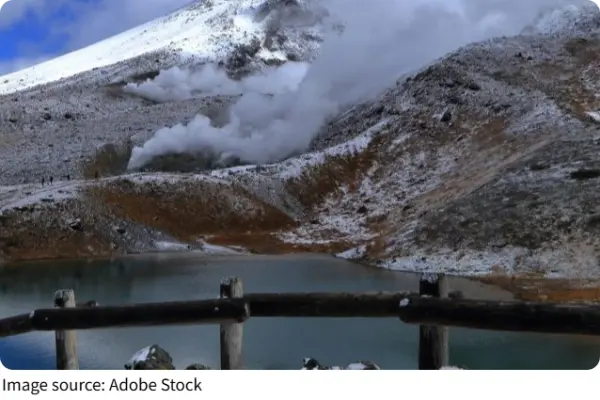
In winter, this mountain transforms into one of western Japan's top ski destinations. The resort has eight courses ranging from beginner slopes to black diamond runs, and the views from the top are unique because you can see both the snow and the ocean at the same time. The powder snow is a draw, and the resort has lodges and restaurants right at the base. A one-day lift ticket is roughly US$40 based on current pricing.
The Beech Forest Walks
You do not have to climb to the summit to experience the mountain's natural beauty. The beech forests here grew undisturbed for centuries because access to the mountain was restricted until the late 19th century. There are short, easy walking courses for people of varied fitness levels that let you relax and connect with the sacred nature of the forest. It is a peaceful way to spend a morning, especially in spring when the fresh greenery comes in, or autumn when the leaves turn. Guided walks are available, with costs varying by operator, typically starting around US$30–50 per person.
The World Heritage Beech Forest Trail
Daisendaki Waterfall
For a different kind of hike, the Daisendaki Waterfall course takes you through pristine forests to a scenic two-tiered waterfall. It is a good alternative if you want a shorter, less crowded walk that still gets you into the heart of the mountain's nature. The trail is popular but tends to be quieter than the main summit route, making it a nice option for a relaxed afternoon. There is no entry fee for the trail.
Final Thoughts
Mount Daisen rewards travelers who want a mix of culture and outdoor adventure without the hype. Daisenji Temple gives you the history, the Natsuyama course gives you the summit views, and the beech forests give you the quiet. In winter, the ski resort takes over, proving this is a year-round destination. Go in summer for the hiking and wildflowers, or in autumn for the colors. Either way, the "Fuji of Hoki" delivers.