Salar de Tara at 14,000 Feet

Mukesh Kumar
| 10-11-2026
 · Travel team
The Atacama Desert is famous for its dry valleys and endless horizons, but Salar de Tara reveals a very different landscape. High in the Andes, around 4,300 metres above sea level, pale salt flats, wetlands, and unusual rock formations create a striking contrast with the desert below.
Located east of San Pedro de Atacama, near Chile's borders with Bolivia and Argentina, this remote area rewards careful planning. The altitude, unpredictable weather, and difficult access make it more demanding than a typical desert excursion, but the scenery offers a remarkable glimpse of the Andean plateau.
Why the height matters
At approximately 4,300 metres (14,100 feet), Salar de Tara sits high enough for altitude sickness to become a serious concern.
The air contains a lower pressure of oxygen than at sea level, making even short walks feel more tiring.
Spend time acclimatising in San Pedro de Atacama, which lies around 2,400 metres above sea level, before considering a higher excursion.
However, spending 48 hours in town does not guarantee protection against altitude sickness.
Move slowly, avoid strenuous activity, and tell your guide if you develop a headache, nausea, dizziness, or unusual fatigue.
If symptoms worsen, descending to a lower elevation is essential.
What you actually see there
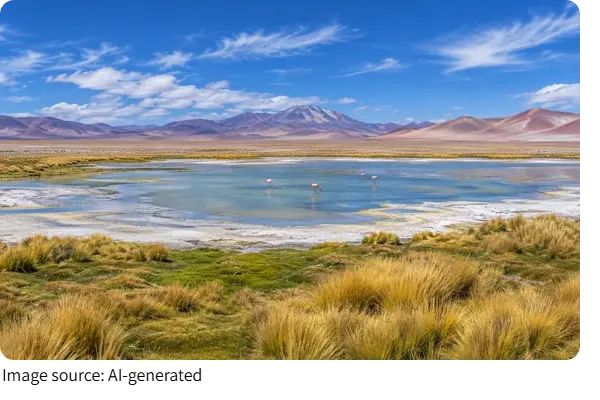
Salar de Tara is a remote salt-flat and wetland landscape surrounded by volcanic mountains and rugged high-altitude terrain.
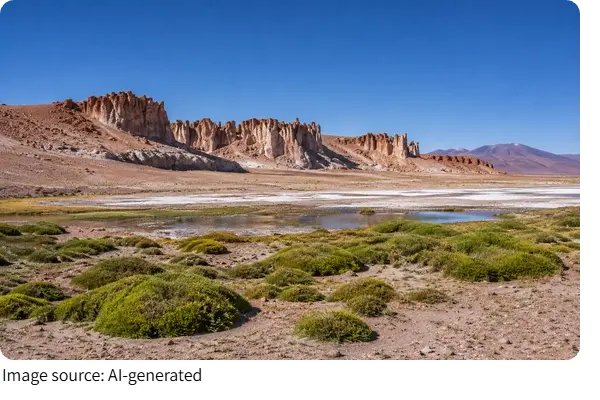
One of the most memorable sights along the approach is the Monjes de la Pacana, a group of enormous rock formations shaped by erosion.
Their towering silhouettes stand against the open plateau, creating excellent photography opportunities.
Around the Tara basin, shallow water, mineral deposits, and mountain reflections add colour to the landscape.
The wetlands also support Andean wildlife, including flamingos when conditions are suitable.
Bring binoculars to observe birds from a respectful distance.
Wildlife sightings and water levels vary with the season, so the scenery may look different from one visit to another.
Getting there and back
Salar de Tara is generally reached through a specialised excursion from San Pedro de Atacama.
There is no regular public transport to the salt flat, and access can involve remote tracks unsuitable for ordinary rental vehicles.
The journey commonly takes several hours each way, depending on the route, road conditions, and permitted access.
Tours often travel east along the international road toward Paso Jama before continuing toward the high-altitude landscapes.
Socaire is not normally on this direct route.
Group excursions, when available, may cost approximately US$100–150 per person, with private trips costing more.
Confirm that the operator can legally access Salar de Tara itself, since environmental protections and access restrictions can affect which areas visitors may enter.
Salar de Tara San Pedro de Atacama Antofagasta Chile
Timing and the weather swing
The high Andes experience dramatic weather changes throughout the year.
From roughly May to September, conditions are often drier, although freezing temperatures, strong winds, and occasional snow remain possible.
During the austral summer, particularly January and February, the Altiplanic winter can bring thunderstorms, heavy rainfall, and difficult road conditions.
At this elevation, mornings may begin well below freezing even when the afternoon feels noticeably warmer.
Dress in layers, including a windproof jacket, gloves, and warm footwear.
Clear skies do not necessarily mean comfortable temperatures, and strong sunlight makes sunscreen and sunglasses essential.
Allow some flexibility in your itinerary because weather-related closures can occur with little warning.
Practical tips before you go
Prepare for a remote excursion with limited services and little reliable mobile coverage.
Carry drinking water, snacks, sun protection, and extra warm clothing.
Check whether meals, entrance charges, and any required permits are included in your tour price rather than assuming a fixed entry fee.
The area is environmentally sensitive, so remain on permitted routes and follow your guide's instructions.
Avoid approaching flamingos or walking across fragile wetland surfaces.
Because altitude affects visitors differently, consider medical advice before travelling if you have relevant health concerns.
A comfortable pace, suitable clothing, and an experienced guide are more important here than fitting every possible viewpoint into one day.
Making the Journey Worthwhile
Salar de Tara is best approached as a full-day high-altitude adventure rather than a quick sightseeing stop.
The journey itself offers expansive views of the Andean plateau, where volcanic peaks rise above broad, sparsely vegetated plains.
Take time to appreciate the changing landscape between viewpoints instead of focusing only on the salt flat.
The Monjes de la Pacana provide an especially memorable contrast between towering stone and open sky.
If access to the Tara basin is restricted, ask your operator which authorised viewpoints or alternative high-altitude locations are available.
Travelling with realistic expectations allows you to enjoy the remarkable scenery without compromising safety or protected habitats.
Salar de Tara offers a side of the Atacama that feels far removed from its familiar desert valleys. Towering rock formations, high-altitude wetlands, and distant volcanic peaks make the journey memorable, but the landscape demands preparation. Allow time to acclimatize, choose an experienced operator, and confirm current access conditions before traveling. With warm clothing, a flexible schedule, and respect for the fragile environment, you can appreciate the extraordinary scenery of the Andean plateau at a comfortable pace.