Birth Date & Sun Sign

Darius
| 12-10-2026
 · Travel team
Welcome back. Most people learn their sun sign once and never question it again.
You're a Leo because your birthday falls in August, and that's the end of it. But the real reason your birth date matters has nothing to do with a printed calendar.
It's about where the sun actually sat in the sky on the exact day you showed up.
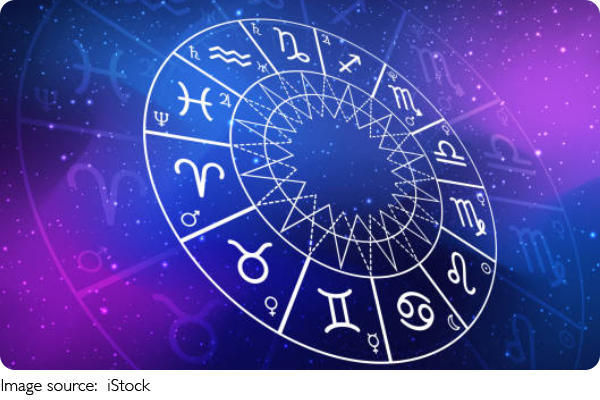
The sun moves, the dates shift
From our view on Earth, the sun drifts through a band of sky called the zodiac, passing through twelve constellations over the course of a year. That path is called the ecliptic, and it takes roughly 365 days to complete. So the sun isn't "in" Leo because August exists. August exists, in a sense, because the sun is passing through that stretch of sky around then. The dates were built around the sun's position, not the other way round.
Why the cusp dates wobble
Here's where it gets messy. The sun doesn't cross into each sign on the same calendar day every year. It shifts by a day or so because of the leap year cycle and the slight tilt in Earth's orbit. That's why someone born on August 22 might find one chart calling them a Leo and another calling them a Virgo. The exact cut-off depends on the year, the time zone, and even the hour you were born. A person born at 11 p.m. on a cusp date can land in a different sign than someone born six hours later.

Time and place change the answer
Your sun sign is set by the sun's position at your moment of birth, which means your birth time and location matter. Two babies born on the same day in the same hospital can technically have different sun signs if one arrives just before the sun crosses into the next constellation and the other just after. Most people never bother checking this, so they carry a sign that's slightly off. Astrologers who build full charts always ask for the exact time, and the sun sign is only one piece of that larger picture.
What the sun sign really tracks
The sun sign is often treated as your core identity, the headline of your chart. That's a modern habit more than an ancient one. Older traditions weighed the moon, the rising sign, and the planets far more heavily. The sun sign got popular because it's easy. You only need a birth date, no birth time, no location. That convenience is exactly why it spread so fast in newspapers and magazines. It's the simplest slice of a much bigger system, and it happens to be the one everyone knows.
The constellations have drifted too
There's another wrinkle most people miss. The constellations themselves have slowly shifted against the calendar over roughly two thousand years, a effect called precession. The zodiac signs used in astrology are fixed to seasons and dates, not to where the constellations sit right now. So when someone says the sun is "in Leo," they usually mean the sign Leo, a 30-degree slice of the sky, not the actual constellation you'd point to tonight. Both ideas get called the same name, which is where a lot of confusion starts.
Checking your own date
If you want to know your real sun sign, pull up an ephemeris, a table showing the sun's position day by day, and look up your birth date and year. Add your birth time and time zone if you can find them. You'll see the sun listed at a specific degree of a specific sign. That degree is your sun sign, and it might not match what you've believed for years. It's a small correction, but it changes the starting point of everything else in a chart.
Next time someone tells you their sign, you'll know there's a date, a time, and a patch of sky behind that one-word answer. Look yours up properly, and see if the label still fits.