Astrology vs Astronomy

Marcus
| 12-10-2026
 · Travel team
You look up on a clear night and see the same stars your grandparents once admired, arranged in familiar patterns across the darkness.
Yet those stars inspire two very different ways of understanding the universe.
Astrology looks to the sky for symbolic meaning, while astronomy studies the physical objects beyond our planet. Although both begin with the same celestial view, their purposes, methods, and conclusions soon take different paths.
The Meaning Behind the Stars
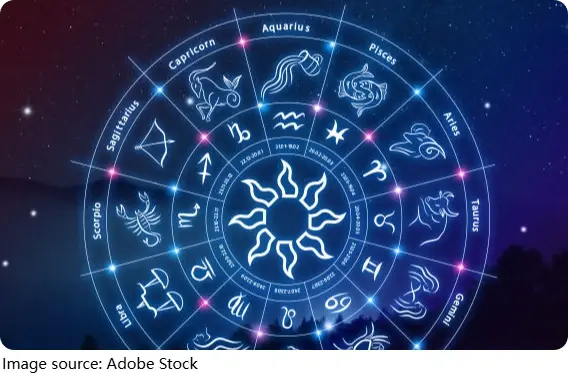
Astrology connects the positions of the Sun, Moon, and planets with the twelve zodiac signs to interpret personality traits and suggest possible influences on human life. Astronomy, by contrast, examines these same celestial objects through measurable properties such as distance, mass, and orbital periods.
The difference lies in the questions each field asks. An astrologer might explore what a birth chart suggests about someone's character, while an astronomer investigates how far away Betelgeuse is or why its brightness changes. One interprets the sky symbolically; the other seeks explanations supported by observation and measurement.
The Stories Behind Constellations
The 88 constellations recognized today were formally established by the International Astronomical Union in 1922. Each represents a defined region of the sky with precise boundaries, rather than simply a collection of stars forming a recognizable picture.
Long before these modern boundaries were established, different cultures created their own celestial patterns and stories. Greek traditions associated Orion with a hunter, while Chinese astronomy organized the sky into different groupings, including four symbolic figures associated with the seasons.
These differences reveal how human cultures have given the stars meaning in their own ways. The stars themselves, however, are physical objects that can lie at vastly different distances from Earth. The three stars forming Orion's Belt appear almost aligned in our sky, even though they are not necessarily close to one another in space.
Astrology and the Science of Astronomy
Astrology has a long history of tradition and symbolic interpretation, while astronomy relies on observations, calculations, and evidence that can be independently tested.
A notable example of astronomy's predictive power came in 1846, when Neptune was discovered after irregularities in Uranus's orbit helped astronomers calculate where another planet might be found. The discovery demonstrated how mathematical predictions could lead to observable results.
Astrology's claims about personality have also been examined scientifically. However, controlled studies have not established reliable evidence that zodiac signs can consistently predict personality traits. This distinction matters because astronomy builds its explanations around testable evidence, whereas astrology operates primarily as a system of symbolic interpretation.
The Zodiac and the Changing Sky
One surprising detail is that the zodiac signs used in Western astrology no longer align precisely with the constellations that share their names. The reason is a slow movement of Earth's rotational axis known as axial precession.
Earth's axis gradually changes its orientation, completing a cycle in roughly 26,000 years. As a result, the apparent positions of the constellations shift over long periods relative to the seasonal calendar used by Western tropical astrology.
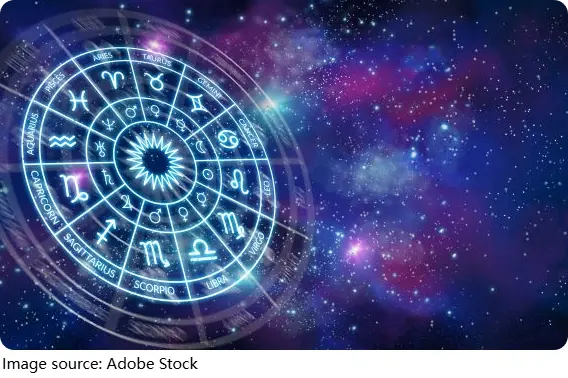
Today, the zodiac signs and their corresponding astronomical constellations are therefore offset. For example, when the Sun is described as being in Leo according to the tropical zodiac, it is generally in front of the astronomical constellation Cancer during much of that sign's calendar period. The exact relationship depends on the date and the boundaries used.
This gradual shift illustrates how astronomical observations can clarify the difference between a symbolic system based on the seasons and the actual positions of celestial objects.
The Beauty of Both Perspectives
Understanding the difference between astrology and astronomy does not mean you must abandon the enjoyment of horoscopes or the mythology surrounding constellations. Both can provide ways to engage with the night sky, provided their purposes are understood.
Seeing Venus low on the horizon after sunset is an astronomical observation: the planet is visible because it reflects sunlight. Interpreting Venus as a symbol of love or relationships belongs to astrology. The first statement concerns a physical object, while the second reflects a traditional symbolic meaning.
You can appreciate these perspectives without confusing them. Try using a star chart app to identify a constellation you recognize, then explore the distances between its brightest stars. Learning what lies beyond the familiar patterns can make the night sky even more fascinating.
Final Advice For You
The night sky offers both a window into the physical universe and a reminder of the stories people have told throughout history. Let curiosity guide you as you explore its wonders. Enjoy astrology as a source of entertainment or personal reflection, and turn to astronomy when you want to understand the universe through scientific evidence. Knowing the difference allows you to appreciate the mystery of the stars while remaining grounded in what observation can reveal.
This content is for entertainment and general insight only and does not constitute professional advice.