Duck Soba Noodle Stir-Fry

Daniel
| 15-10-2026
 · Cate team
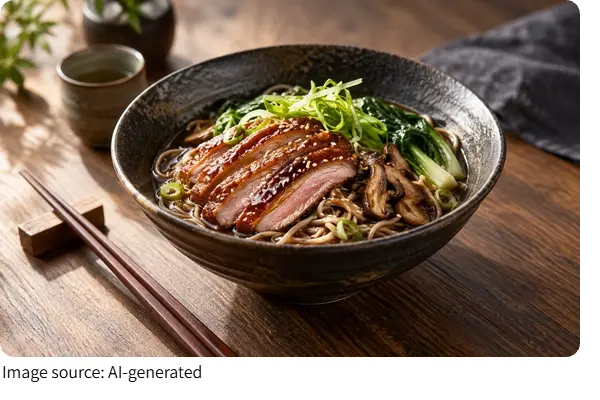
Soba noodles make an excellent choice when a quick meal needs to feel both satisfying and fresh. Their slightly nutty flavor pairs naturally with tender duck, crisp vegetables, and a savory sauce.
This recipe brings those ingredients together in one skillet, creating a colorful noodle dish that can be prepared without complicated techniques. It is a practical option for lunch or dinner when a flavorful meal is needed in a short amount of time.
Ingredients
You will need the following ingredients:
- 200 g soba noodles
- 250 g duck thinly sliced
- 1 red bell pepper, thinly sliced
- 1 yellow bell pepper, thinly sliced
- 100 g green beans, trimmed and sliced
- 1 small carrot, julienned
- 2 cloves garlic, minced
- 1 teaspoon grated ginger
- 2 tablespoons soy sauce
- 1 tablespoon sesame oil
- 1 tablespoon rice vinegar
- 1 teaspoon honey
- 1 tablespoon cooking oil
- 1 tablespoon sesame seeds
- 2 spring onions, thinly sliced
Preparation and Cooking Time
Preparation takes about 15 minutes and cooking about 15 minutes, so the dish is ready in around 30 minutes.
Instructions
Work through the steps in this order:
1. Cook the soba noodles according to the package directions, then drain and rinse briefly with cool water.
2. Mix the soy sauce, sesame oil, rice vinegar, and honey in a small bowl.
3. Heat the cooking oil in a large skillet over medium-high heat. Add the duck and cook until cooked through.
4. Add the garlic and ginger, then stir for about 30 seconds.
5. Add the bell peppers, green beans, and carrot. Stir-fry until the vegetables are tender but still slightly crisp.
6. Add the cooked soba noodles and pour in the sauce.
7. Toss everything gently for 1 to 2 minutes until the noodles are evenly coated and heated through.
8. Sprinkle with sesame seeds and spring onions before serving.
Choosing the Right Soba Noodles
Soba noodles are made primarily from buckwheat, although some varieties contain a combination of buckwheat and wheat. Different brands can vary in texture and cooking time, so following the package instructions is the easiest way to get the best result.
One important step is rinsing the noodles after cooking. This helps remove excess surface starch and keeps the strands from becoming overly sticky. Drain them well before adding them to the skillet.
Avoid overcooking the noodles because they will spend another short period heating with the duck, vegetables, and sauce. Slightly firm noodles generally hold up better during the final tossing stage.
Keeping the Vegetables Crisp
The vegetables add color, freshness, and texture to the dish. Bell peppers provide a mild sweetness, green beans bring a firm bite, and carrots add extra crunch.
Do not cook the vegetables for too long. They should soften enough to eat comfortably while keeping some texture. Adding them after the duck also prevents them from becoming overly soft while the meat finishes cooking.
Making the Sauce
The sauce uses a few simple ingredients to create a balance of savory, tangy, and lightly sweet flavors. Soy sauce provides the main seasoning, while rice vinegar adds brightness. Sesame oil contributes a distinctive nutty aroma, and honey rounds out the mixture.
Taste the sauce before adding it to the noodles. If a stronger savory flavor is preferred, add a small amount of soy sauce. For more brightness, a little extra rice vinegar can be added.
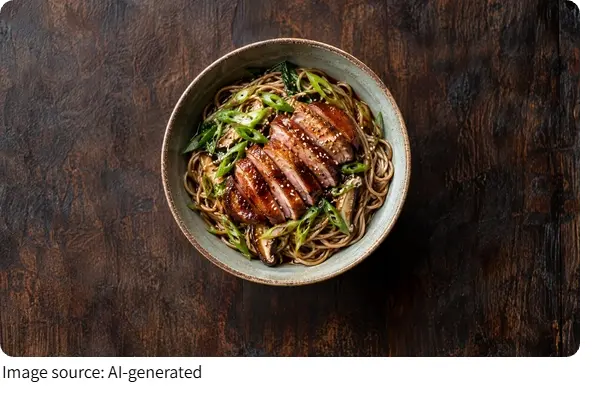
For the best texture, toss and serve the noodles straight away, while the vegetables still have some bite. The vegetables can be changed according to what is available, and slicing the duck thinner helps it cook faster. If the noodles start to stick while tossing, a small splash of water or extra sauce helps loosen them.