Parmesan Rind Pesto

Chandan Singh
| 18-08-2026
 · Cate team
It is easy to look at a dry parmesan rind and assume its useful life is over. In reality, it is one of the most flavourful parts of the cheese. Parmesan rind is commonly dropped into soups, stocks and risottos, where it slowly releases its salty, savoury character.
But there is another way to use it that requires almost no waiting: grate it finely and turn it into pesto. The result is stronger and more intense than conventional pesto made with softer grated parmesan.
Combined with fresh basil, pine nuts, garlic and extra-virgin olive oil, the rind produces a robust sauce that works particularly well with pasta, roasted vegetables, grilled dishes or simply spread over good bread.
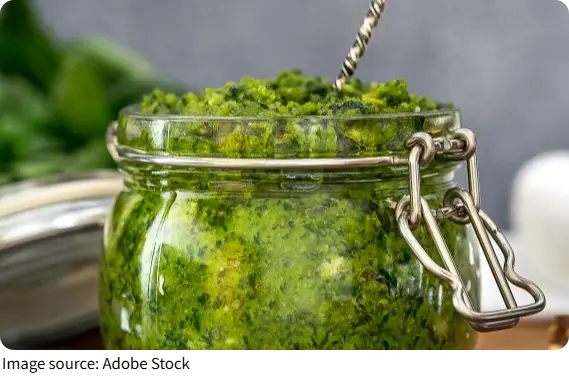
Why Save Parmesan Rind?
The outside of a parmesan wheel becomes firm during the long aging process, but it is not an artificial coating that needs to be discarded.
It is simply the hardened exterior of the cheese itself.
Because it has lost more moisture than the centre, its flavour can be particularly concentrated. That intensity is exactly what makes it useful in cooking.
The only challenge is texture. A whole rind can be too tough to eat directly, so the easiest solution for pesto is to grate it as finely as possible.
A fine grater works particularly well, turning the hard surface into tiny particles that blend easily with the other ingredients.
Start with a small amount: parmesan rind has a powerful flavour, and you can always add more later.
Ingredients
Makes a small jar
4 tbsp pine nuts
1 small garlic clove, peeled
A pinch of coarse sea salt
75 g fresh basil, including tender stalks
2 tbsp finely grated parmesan rind
100–150 ml extra-virgin olive oil
Toast the Pine Nuts
You can use pine nuts raw, but gently toasting them first gives the pesto a warmer, nuttier flavour.
Place them in a dry frying pan over medium-low heat and cook for a few minutes, moving them frequently so they colour evenly.
As soon as they become lightly golden and fragrant, remove them from the pan. Pine nuts can burn surprisingly quickly, so do not leave them unattended.
Set aside roughly half of the nuts for later.
Keeping some of them less finely crushed gives the finished pesto a more interesting texture.
Start With Garlic and Salt
A pestle and mortar gives particularly good results here because crushing the ingredients releases their aromatic oils while preserving a pleasantly rustic texture.
Place the garlic in the mortar with a pinch of coarse sea salt.
Crush until you have a smooth paste.
The salt does more than season the pesto: its coarse crystals help break down the garlic.
Add the Basil
Add the basil gradually rather than trying to fit the entire bunch into the mortar at once.
Tender basil stalks do not need to be thrown away. Chop thicker sections if necessary, then add them with the leaves.
Press and grind the basil against the sides of the mortar until it begins to collapse into a fragrant green paste.
Do not worry about creating a completely smooth mixture. A little texture is part of the appeal.
Add the Parmesan Rind
Stir in the finely grated parmesan rind.
Because its flavour is concentrated, two tablespoons may be plenty. Taste before adding extra.
Next, crush in half of the pine nuts.
Gradually pour in the olive oil while continuing to stir and grind. Begin with around 100 ml, then add more until the pesto reaches the consistency you prefer.
For pasta, a slightly looser sauce works well. For sandwiches, crostini or grilled vegetables, you may want to keep it thicker.
Finally, stir in the remaining pine nuts.
Can You Use a Blender?
Absolutely.
A blender or small food processor makes the recipe even quicker.
Add the garlic, salt, basil, grated rind, half the pine nuts and most of the olive oil. Pulse rather than blending continuously until the ingredients form a coarse sauce.
Add more olive oil if necessary, then stir the remaining pine nuts through by hand.
The texture will generally be smoother than pesto made with a pestle and mortar, but the result is still delicious.
How to Use Parmesan Rind Pesto
The concentrated cheese flavour makes this pesto particularly good with ingredients that can stand up to it.
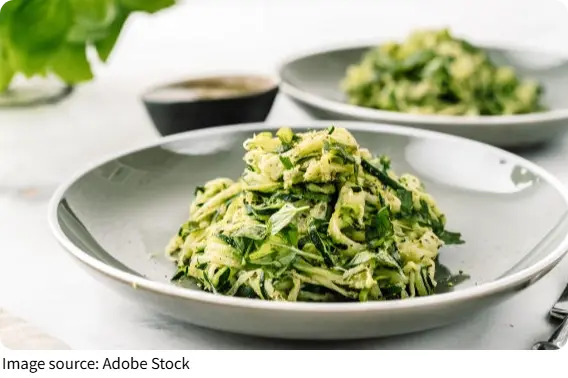
Toss it through wholegrain pasta, where its richness balances the stronger flavour of the grain.
Spoon it over roasted courgettes, aubergines, peppers or tomatoes. It is also excellent with grilled mushrooms or potatoes.
You can spread a little on toasted bread, stir it into cooked grains or use a spoonful to finish a vegetable soup.
If using it with pasta, keep back a little cooking water. Stirring a splash into the pesto helps loosen the sauce and makes it cling more evenly to the pasta.
Adjust It to Your Taste
Pesto is forgiving.
If the parmesan rind makes it too intense, add more basil or olive oil. If you want a nuttier sauce, add another spoonful of pine nuts.
A squeeze of lemon can provide freshness, although traditional pesto does not require it.
And if you do not have enough parmesan rind for the full amount, combine it with ordinary grated parmesan rather than waiting until you collect more.
From Leftover to Ingredient
The most satisfying part of this recipe is that it turns something usually thrown away into something genuinely useful.
A parmesan rind can flavour several meals before it ever reaches the bin — first as grated seasoning or pesto, or simply simmered whole in soups and sauces.
Instead of treating the hard end of the cheese as waste, think of it as concentrated parmesan waiting for the right recipe.