SUV 4WD, Two Worlds

Ravish Kumar
| 17-08-2026
 · Automobile team
Hi, Readers! An SUV with four-wheel drive can feel like a Swiss watch wearing hiking boots.
It looks ready for almost anything, but the way its system works in city driving versus off-road driving is a story of two very different jobs. On paved roads, the goal is smooth grip, stability, and easy manners.
Off the pavement, the mission changes completely. Now the system needs to deal with loose ground, uneven surfaces, steep slopes, and wheels that may lose contact with the ground like a chair with one leg on a stack of books.
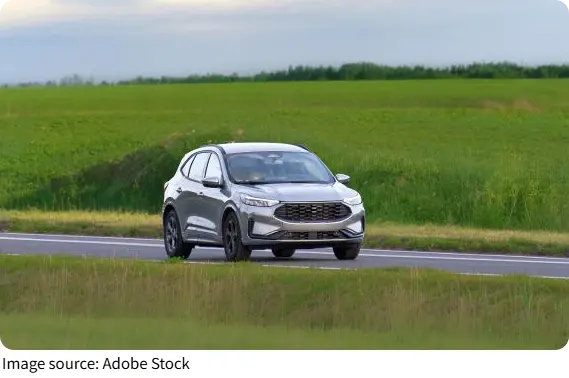
What 4WD Means
Four-wheel drive is a drivetrain system that powers all four wheels. In many vehicles, this is done through a transfer case that sends power to both the front and rear axles. Some systems are full-time, meaning all four wheels are driven all the time. Others are part-time, where the driver selects four-wheel drive only when needed. There are also automatic systems that shift power between axles when traction changes. The core idea is simple: instead of asking just two wheels to do all the work, the vehicle shares the job across four contact points.
How City Driving Uses It
In the city, roads usually offer high traction. That means a four-wheel-drive system is mostly helping with stability in rain, slippery surfaces, or when starting from a stop on a poor surface. Many SUVs designed mainly for urban use rely on automatic systems that run like quiet backstage staff. Most of the time, they send more power to one axle, then quickly adjust when slip appears. This setup helps the vehicle feel predictable, easy to park, and smooth in turns. It also supports fuel efficiency better than a heavy-duty setup because the system does not always lock everything together.
Another big city concern is road behavior. On dry pavement, the front and rear axles rotate at slightly different speeds during turns. Systems made for city use allow this difference through a center differential or electronic control. Without that flexibility, the drivetrain can bind up on firm surfaces, which is about as comfortable as walking in shoes two sizes too small.
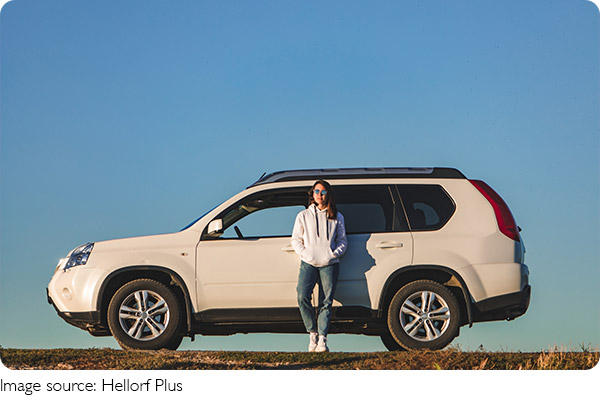
How Off-Road Driving Uses It
Off-road driving is where four-wheel drive earns its muddy boots. On dirt, sand, gravel, rocks, or steep terrain, the system is not just improving stability. It is helping the vehicle keep moving when one or more wheels lose grip. Part-time 4WD and tougher off-road systems often include low-range gearing. Low range multiplies torque and allows slower, more controlled movement over obstacles or up steep climbs. It is less about speed and more about careful crawling, like moving a sofa through a narrow stairwell one inch at a time.
Many off-road-focused systems also use locking differentials or very limited axle speed differences. That matters because on rough terrain, one wheel can spin uselessly while another has grip. A more locked setup makes sure power still reaches wheels that can actually push the vehicle forward. Ground clearance, approach angle, departure angle, suspension travel, and tires also matter a lot, so four-wheel drive is only one piece of the off-road puzzle.
Why They Feel Different
A city-oriented SUV usually prioritizes comfort, quiet operation, and automatic traction help. Its four-wheel-drive system is tuned to step in gently and keep daily driving simple. An off-road SUV, on the other hand, often gives the driver more control and more mechanical capability. It may allow manual mode selection, low range, and stronger traction hardware. That can make it better in rough conditions, but sometimes less necessary, and less efficient, for everyday paved travel.
This is why not every SUV with four driven wheels is built for the same adventure. Some are excellent for wet roads, winter commutes, and occasional unpaved paths. Others are designed to tackle difficult terrain where wheel articulation and low-speed control matter far more than polished road manners.
In short, city driving and off-road driving ask a four-wheel-drive system to play two completely different roles. In town, it is a quiet helper improving grip and balance. Off-road, it becomes the main climbing gear, working hard to keep the vehicle moving when the ground turns tricky. If you are choosing an SUV, think about where it will spend most of its life. A system built for school runs and rainy highways is not the same as one built for rocky trails, and picking the right one makes all the difference.