Why Mid-Engine Cars Win

Mukesh Kumar
| 14-08-2026
 · Automobile team
The way a sports car feels in a corner is determined as much by weight distribution as by engine power. Among the many chassis configurations used in performance cars, the mid-engine layout is considered one of the most effective for achieving balanced handling.
By positioning the engine between the front and rear axles, engineers place a large portion of the vehicle’s mass near its center, allowing the car to respond more quickly and more precisely to steering inputs.
This layout is used primarily in performance-focused sports cars because it improves agility, traction, and overall chassis control. The goal is not simply to make the car faster in a straight line, but to make it more composed and predictable through every phase of a corner.
What a Mid-Engine Layout Means
In most mid-engine sports cars, the engine is mounted directly behind the seats and ahead of the rear axle. This keeps the heaviest mechanical component within the wheelbase rather than at either end of the vehicle.
The arrangement differs from a traditional front-engine design, where the engine sits ahead of the passenger compartment, and from a rear-engine design, where the engine extends behind the rear axle. By concentrating mass near the middle of the chassis, the car becomes less resistant to rotating during a turn, which improves responsiveness and directional accuracy.
Why Centralized Weight Matters
A vehicle changes direction most effectively when its weight is distributed evenly and kept close to the center. In a mid-engine car, less mass is located far from the middle of the chassis, so the car reacts more quickly when the driver turns the steering wheel.
This produces three important handling benefits:
- Faster turn-in response
- Better balance through the corner
- Greater stability during transitions between braking, turning, and acceleration
The result is a driving experience that feels precise rather than heavy or delayed.
Improved Traction Under Acceleration
Because the engine is positioned closer to the driven rear wheels, a mid-engine car can generate strong traction when accelerating out of a corner. The weight over the rear tires helps them maintain grip, allowing power to be applied more effectively.
This advantage is especially valuable in high-performance driving, where exiting a corner efficiently is often just as important as entering it.

A More Neutral Handling Character
Many front-engine cars tend to place a larger percentage of their weight over the front axle, which can encourage understeer when cornering hard. A well-designed mid-engine car is often able to achieve a more neutral balance, meaning the front and rear tires share cornering loads more evenly.
A neutral chassis gives the driver greater confidence because the car follows steering inputs more accurately and requires fewer corrections during fast directional changes.
Engineering Challenges
The dynamic advantages of a mid-engine layout come with practical compromises. The engine occupies space that could otherwise be used for passengers or luggage, so many mid-engine sports cars have compact cabins and limited storage capacity.
Cooling systems are also more complex because airflow must be carefully managed around the centrally mounted engine. Maintenance access can be less convenient than in a front-engine vehicle, increasing the engineering complexity of the overall package.
Why Performance Cars Use It
For engineers focused on handling performance, the mid-engine layout offers a rare combination of agility, traction, and stability. These qualities are particularly important on winding roads and racing circuits, where rapid changes in direction and consistent tire grip determine overall performance.
The configuration is therefore chosen not for convenience, but for its ability to help the chassis perform at a higher level.
How It Compares With Other Layouts
Compared with a front-engine sports car, a mid-engine model usually feels more eager to change direction because less weight is carried at the nose of the vehicle. Compared with a rear-engine design, it generally provides a more balanced feel because the engine is not positioned beyond the rear axle.
Each layout has strengths, but the mid-engine arrangement is especially effective at combining quick reactions with strong rear-wheel traction.
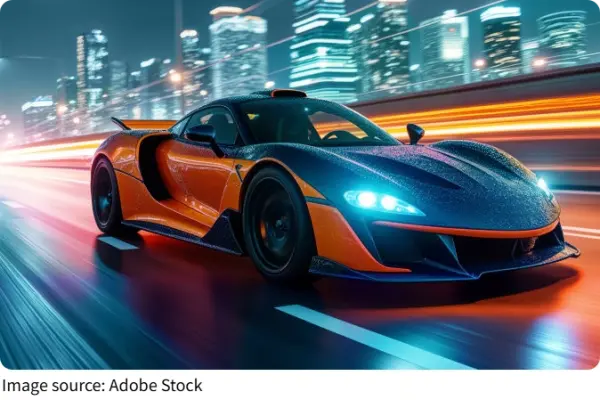
The mid-engine layout improves sports car handling because it places the vehicle’s heaviest component where it benefits the chassis most: near the center. This enhances steering response, cornering balance, traction, and overall control.
That is why many high-performance sports cars use this configuration when handling precision is the priority. While it is not the ideal solution for every type of vehicle, it remains one of the most effective engineering approaches for creating a car that feels agile, composed, and rewarding to drive.