Supercar Aero Explained

Pardeep Singh
| 27-10-2026
 · Automobile team
A supercar is designed to move through the air as efficiently as possible while remaining stable at very high speeds.
Aerodynamics is not simply about adding a large rear wing; it is about controlling how air travels around, through, and beneath the entire vehicle.
Engineers must balance several competing goals. Reducing drag helps the car accelerate faster and reach higher speeds, while generating downforce improves grip and stability. At the same time, airflow must provide enough cooling for the powertrain and braking system without creating unnecessary resistance. The most effective supercars achieve this balance through a carefully integrated aerodynamic design.
A Low Profile Reduces Air Resistance
The low, streamlined shape of a supercar is one of its most important aerodynamic features. A lower nose and roofline reduce the frontal area exposed to the air, allowing airflow to pass more smoothly over the body.
Ride height also influences aerodynamic performance. By keeping the vehicle close to the ground, engineers reduce the amount of air entering beneath the car, which helps limit turbulence and improves overall efficiency when combined with a carefully designed underbody.
The Front End Manages Incoming Air
The front of the vehicle is responsible for organizing the airflow before it reaches the rest of the body. Air intakes, contours, and aerodynamic surfaces are positioned to direct air toward cooling systems while minimizing disturbance underneath the car.
A front splitter helps control pressure around the front axle. By managing how air moves above and below the splitter, engineers can influence aerodynamic balance and improve stability at speed.
Cooling Without Excess Drag
High-performance vehicles produce substantial heat, especially during sustained acceleration and braking. Cooling openings must deliver enough airflow to critical components without significantly increasing aerodynamic resistance.
This requires careful coordination between bodywork, internal ducting, and airflow exits. Efficient cooling design allows the vehicle to maintain performance while preserving aerodynamic efficiency.
Body Contours Keep Airflow Stable
Every curve on a supercar has an aerodynamic purpose. Smooth transitions help airflow remain attached to the body for as long as possible, reducing separation and minimizing turbulence.
The side surfaces are particularly important because they guide air toward the rear of the vehicle. Stable airflow along the sides improves the effectiveness of the rear aerodynamic elements and contributes to a more balanced aerodynamic behavior.
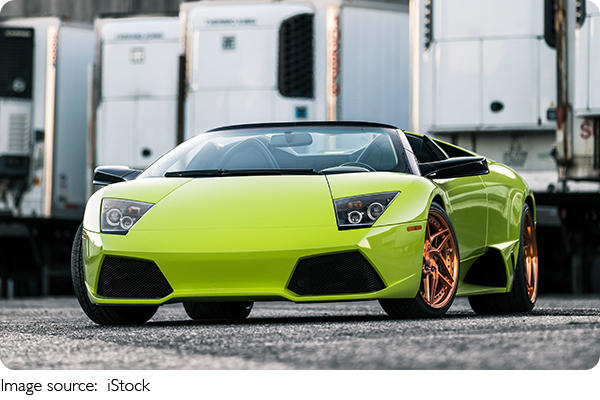
Rear Aero Creates Downforce
Rear wings and spoilers are designed to modify airflow and generate downforce. This additional force presses the tires more firmly against the road, improving grip during high-speed cornering and acceleration.
However, downforce is never free. Increasing aerodynamic load usually increases drag, so engineers select wing shapes and angles that provide the desired stability without sacrificing excessive speed and efficiency.
Wheels Are a Significant Source of Turbulence
Rotating wheels disturb the surrounding air more than many people realize. They create complex vortices that can increase drag and disrupt airflow along the sides of the car.
To manage this effect, wheel arches, vents, and surrounding body panels are shaped to control the air around the tires. Proper wheel airflow management is an important part of the overall aerodynamic package.
The Underbody Is the Hidden Aerodynamic Surface
A large share of a supercar’s aerodynamic performance comes from underneath the vehicle. Exposed mechanical components create turbulence, so modern performance cars often use smooth underbody panels to guide airflow efficiently.
Airflow channels and rear diffusers help control pressure beneath the car. As the air accelerates and then expands through the diffuser, the underbody can contribute significantly to aerodynamic downforce while maintaining efficient airflow from front to rear.
Aerodynamic Forces Grow Rapidly With Speed
At low speeds, aerodynamic effects are relatively small. As speed increases, both drag and downforce rise dramatically, making aerodynamic balance increasingly important.
A supercar that feels stable at moderate speeds may behave very differently at high speed if the airflow is not properly managed. Engineers therefore tune the entire aerodynamic system to ensure predictable handling, stability, and grip across the vehicle’s operating range.
Form and Function Are Integrated
In the best supercar designs, appearance and engineering are inseparable. The body shape guides airflow, the openings support cooling, the wheels are integrated into the airflow strategy, and the underbody and rear aero work together to generate stability.
Rather than relying on a single dramatic aerodynamic component, modern supercars achieve their performance through the coordination of many carefully engineered elements.
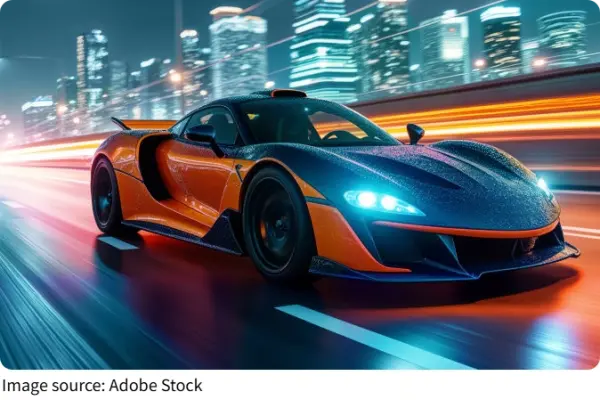
Supercar aerodynamics is the science of controlling airflow to achieve the ideal balance of low drag, effective cooling, aerodynamic downforce, high-speed stability, and efficiency. Every major part of the vehicle contributes to this balance, including the front splitter, body contours, wheels, underbody, and rear diffuser.
Modern supercars do not rely on a single aerodynamic feature. Their performance comes from a carefully integrated design in which airflow is managed across the entire vehicle. This approach allows the car to remain stable, responsive, and efficient as speed increases, making aerodynamics one of the most important foundations of high-performance automotive engineering.