Giraffe Drinking Challenge

Chris Isidore
| 13-08-2026
 · Animal team
Hi, Lykkers! Have you ever pictured a giraffe drinking from a small pool? With its head several meters above the ground, drinking is not as simple as it seems.
A giraffe must adjust its entire posture to reach the water. It spreads its front legs and bends its long neck downward. This unusual move shows how perfectly its body is adapted to its great height.
Instead, it has to carefully rearrange its long legs, stretch its neck downward, and manage major changes in blood pressure at the same time. What looks like a simple drink is actually a remarkable combination of balance, anatomy, and physiology.
Why Reaching the Water Is So Difficult
A giraffe's height is an advantage when feeding but creates a very different problem at ground level. Its long neck allows it to browse on vegetation high above many other herbivores, yet its head is far from the ground when it needs water. The solution begins with the front legs.
Rather than keeping all four legs close together, a giraffe spreads its forelegs outward and positions its head between them. It then bends its long neck downward until its muzzle can reach the water. The resulting posture looks awkward compared with the drinking position of a horse, antelope, or dog, but it gives the giraffe enough clearance to reach the surface.
This position is not particularly stable. A giraffe must maintain its balance while supporting a large head at the end of an extended neck. Getting back upright also requires a deliberate movement, which helps explain why drinking is usually treated as a vulnerable activity rather than something the animal does casually.
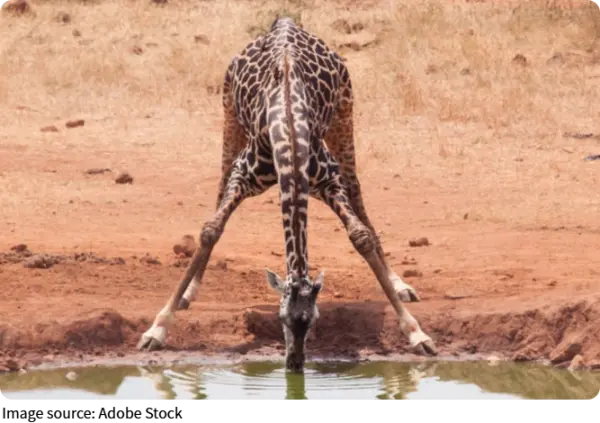
The Drinking Position Leaves Giraffes Exposed
There is another reason the behavior matters: visibility. When a giraffe is standing normally, its height gives it an excellent view across open surroundings. A drinking giraffe loses some of that advantage because its head is lowered and its forelegs are spread apart.
That makes the animal less prepared to respond immediately to a nearby threat. For this reason, giraffes often approach water cautiously and remain alert around watering sites. They may pause before drinking, scan their surroundings, and quickly raise their heads afterward. The risk is especially important in habitats where predators such as lions may be present.
The drinking posture therefore represents a compromise. The giraffe needs to lower its head far enough to reach the water, but it does not want to remain in that exposed position longer than necessary.
What Happens Inside a Giraffe's Neck?
The physical challenge does not stop at reaching the water. A giraffe's brain sits several meters above its heart, so maintaining adequate blood flow to the head requires an unusual cardiovascular system. Its heart generates high blood pressure to push blood upward through the long neck.
The giraffe also has specialized structures in its circulatory system that help regulate blood movement. Thick-walled arteries can withstand the high pressure, while valves and other adaptations help control circulation. One especially important structure is the rete mirabile, a network of small blood vessels located near the base of the brain. It helps moderate changes in blood pressure associated with head movement.
This becomes particularly important when a giraffe raises its head after drinking. Blood that was moving toward the lowered head must be managed as the animal rapidly changes position. Without effective cardiovascular regulation, sudden changes in pressure could interfere with normal brain function.
Why Giraffes Do Not Constantly Visit Water
Although water is essential, giraffes are not usually associated with frequent drinking trips. Their diet consists largely of leaves and other plant material, and vegetation can contribute substantial moisture to their daily intake. This does not mean giraffes can live without drinking, but their water requirements and drinking frequency vary according to factors such as food availability, environmental conditions, and habitat.
In some circumstances, giraffes may go several days between visits to a water source. That behavior can be useful because every journey to water carries costs. A watering hole may attract numerous animals, creating competition and increasing the possibility of encountering predators. Remaining away from these crowded locations can therefore be advantageous when sufficient moisture is available through food.
However, giraffes will still drink when environmental conditions and their physiological needs make it necessary. Their habits are not governed by a simple rule that they "never need water."
Drinking Is a Whole-Body Maneuver
One of the most interesting parts of giraffe drinking is that the neck receives most of the attention, even though the entire body participates. The forelegs create the space needed for the head to descend. The long neck provides the reach. Muscles throughout the neck help control the movement, while the cardiovascular system handles the dramatic vertical distance between the heart and brain.
Even the animal's surroundings influence the decision. A giraffe must approach a suitable water source, assess the area, lower its head, drink, and return to its normal stance. So the process is much more than simply "bending down."
Why This Strange Posture Makes Sense
Evolution has given giraffes an unusual combination of features that work especially well for their lifestyle. Their towering bodies and elongated necks provide access to vegetation that many other herbivores cannot reach easily. But the same anatomy creates a serious mechanical challenge whenever food or water is located near the ground.
Instead of solving the problem by having a completely different body shape, giraffes use a specialized behavioral solution: spreading the front legs and lowering the neck between them. It may look uncomfortable to us, but for a giraffe, this posture is a practical adaptation to an extraordinary body.
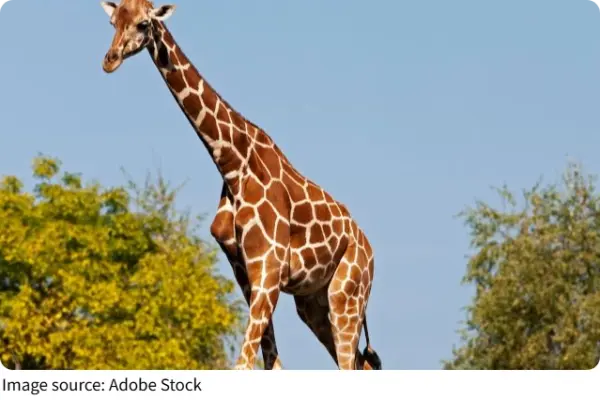
A giraffe quietly lowering its head toward a pool may look like an amusing scene, but there is a lot happening beneath that unusual posture. Its forelegs create the necessary space, its neck reaches the water, and its cardiovascular system helps manage the demanding changes associated with moving the head up and down.