Why Ride Height Varies

Finnegan Flynn
| 12-08-2026
 · Automobile team
Hi, Readers! Cars may all roll on four wheels, but their underside clearance is a bit like shoe choice for different errands.
Some wear sleek loafers for smooth city sidewalks, some wear sturdy sneakers for broken pavement, and some show up in hiking boots ready for rocky trails. That difference starts with chassis height, which affects how close the vehicle sits to the ground and how easily it can pass over bumps, ruts, puddles, and steep ramps.
In simple terms, sedans usually sit lower for steadier road manners, SUVs sit higher for a broader mix of comfort and clearance, and off-road models go higher still to deal with rough terrain where the road looks like it gave up halfway through.
The chassis is the supporting framework of a vehicle. It carries major parts and helps determine how the machine handles loads, movement, and surface changes. When engineers set chassis height, they are balancing several things at once: stability, passenger comfort, aerodynamics, ease of entry, suspension travel, and ground clearance. Raise the vehicle too much, and cornering can feel less planted because the center of mass sits higher. Drop it too low, and every speed bump starts acting like a gatekeeper with attitude. So different vehicle types end up with different heights because they are built for different jobs, not because one design is simply better than another.
Why sedans sit lower
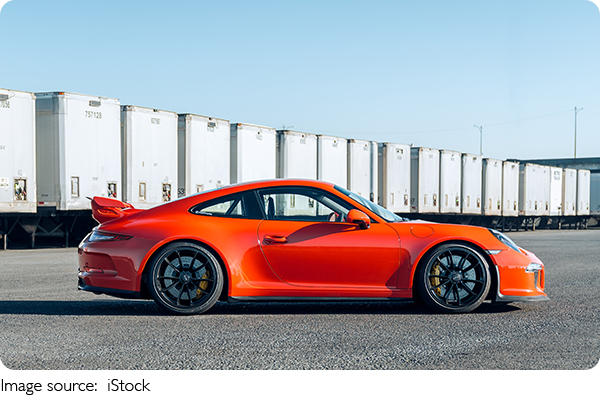
A sedan is usually designed for paved roads, daily commuting, and efficient long-distance driving. Its lower chassis height helps reduce air resistance, which can improve efficiency and make the car feel calmer at higher speeds. It also helps with stability when turning, because the body has less tendency to lean. On well-kept roads, this setup feels tidy and predictable, like carrying a full cup of coffee without turning the cabin into a mini cleanup project.
The trade-off is passability. A lower sedan has less ground clearance, so it is more likely to scrape on tall speed bumps, steep parking garage entrances, rough village roads, or deep potholes. Its approach, breakover, and departure angles are usually smaller too. That means the front, middle, or rear of the vehicle can more easily touch the ground when crossing uneven surfaces. For normal city use, that is usually fine. For rougher paths, it starts feeling like wearing dress shoes on a muddy trail.
Why SUVs sit higher
SUVs are built to cover a wider range of road conditions. Their higher chassis height gives them more ground clearance than sedans, which helps when crossing broken pavement, shallow water, unpaved roads, or speed bumps that seem personally offended by low cars. This extra height also gives drivers a higher seating position, which many people like because it improves forward visibility.
But that added clearance comes with compromise. A taller body often means a higher center of mass, so an SUV may not feel as nimble as a sedan in quick direction changes. Engineers work around this with suspension tuning, wider tracks, and electronic control systems, but physics still likes to leave its signature on the bill. In terms of passability, though, SUVs usually do better than sedans because they can clear obstacles more easily and often have suspension setups meant to tolerate rougher surfaces.

Why off-road models go further
Off-road vehicles are the specialists of the group. They are built for terrain that can include rocks, deep ruts, loose dirt, and steep slopes. To handle this, they generally have the greatest ground clearance, longer suspension travel, and chassis designs that can better cope with twisting and uneven loads. Their approach, breakover, and departure angles are also designed to be more generous, which helps them climb over obstacles without scraping the front, underside, or rear.
Many off-road models also use systems that improve traction on challenging ground, such as four-wheel-drive layouts, low-range gearing, and more rugged tires. This gives them a clear edge in passability. If a sedan is a city commuter and an SUV is an all-rounder, an off-road vehicle is the hiking guide who shows up with proper gear, a map, and the calm confidence of someone who knows the trail is going to get messy.
What passability really means
Passability is not just about height. Ground clearance matters a lot, but so do tire grip, suspension travel, wheelbase, and the three key angles: approach, breakover, and departure. A vehicle with decent clearance but poor angles may still scrape when cresting a slope. A taller body without suitable tires or suspension may look ready for rough ground but perform more like a stylish umbrella in a windstorm.
That is why sedan, SUV, and off-road differences are best understood as design priorities. Sedans prioritize road comfort, efficiency, and stable paved-road handling. SUVs aim for versatility with moderate to strong clearance and everyday practicality. Off-road vehicles prioritize difficult terrain and obstacle crossing, even if that means giving up some on-road smoothness or efficiency.
In the end, chassis height differs because vehicles are built with different missions in mind. If your routes are mostly city streets and highways, a sedan is often enough. If your roads are mixed and sometimes rough, an SUV brings a useful cushion of clearance. If your path regularly includes deeply uneven ground, an off-road model is the clear winner. Pick the shoe for the journey, and the road gets a lot less dramatic.