Why Bikes Back Up Bad

Naveen Kumar
| 12-08-2026
 · Automobile team
Hi, Readers! A car reversing is usually a mildly annoying chore.
A motorcycle reversing is the same chore wearing clown shoes on a slippery floor. The reason is simple at first glance: a car stands on four contact points and stays upright by itself, while a motorcycle balances on two and asks the rider to play part-time tightrope walker.
But the deeper reason sits in how two-wheeled machines steer, balance, and react when speed drops to a crawl.
A motorcycle is dynamically stable in motion, not statically stable at rest. That little distinction does a lot of heavy lifting. At normal riding speed, the machine can be balanced through steering inputs, and the rider can correct lean by adjusting direction. This is tied to countersteering, where a rider briefly steers in one direction to initiate a lean in the other. It sounds backward because it is backward, like trying to guide a rebellious shopping cart that thinks it knows better. At speed, this strange dance works beautifully. At very low speed, especially while reversing, the whole trick gets clumsy fast.

Why reversing feels worse
When a motorcycle moves forward, the front wheel geometry helps it self-correct. The steering axis, trail, and wheel behavior all contribute to that familiar sense that the bike wants to track forward if the rider stays smooth. In reverse, that helpful geometry stops acting like a polite assistant and starts behaving like a wobbly office chair. The front wheel no longer offers the same natural stabilizing effect, so the rider must handle balance with much less mechanical help.
There is also the issue of momentum. Forward motion gives the rider time and authority to make tiny steering corrections. Reverse motion is usually slower, shorter, and awkwardly powered, if it is powered at all. Many motorcycles are backed up by foot power, not engine drive. That means the rider is managing machine weight, body position, steering angle, slope, and balance all at once. It is a bit like trying to move a ladder backward through a narrow hallway while standing on roller skates.
The low-speed balancing problem
At low speed, motorcycles become more demanding because balance corrections must be larger and more deliberate. A bicycle or motorcycle stays up in motion because the rider constantly steers to keep the contact patches under the center of mass. Slow the machine enough, and those corrections become less forgiving. There is less stabilizing effect from forward motion, less gyroscopic contribution from the wheels, and less room for error before gravity starts acting like an impatient landlord.
Cars do not care much about this because they do not need balancing in the first place. Their four-wheel layout provides static stability. When a car reverses, the challenge is mainly spatial awareness and steering path. When a motorcycle reverses, the challenge is spatial awareness plus balance plus weight control plus awkward footing. It is the same errand, but one person brought a backpack full of bricks.
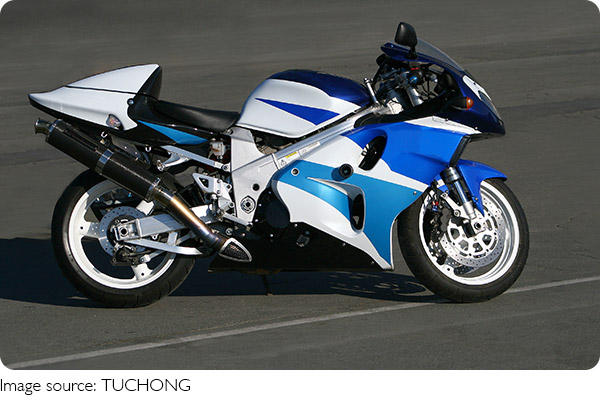
Why two wheels are tricky in tight spaces
Two-wheeled vehicles are excellent at staying narrow and agile in motion, but those same traits can become annoying in parking lots, ramps, or uneven ground. A motorcycle can lean, and lean is useful when turning forward. When backing up, lean is just a countdown clock. If the machine tips a little too far, the rider may not have enough leverage or footing to recover it.
Steering also becomes more sensitive in a bad way. Turn the bars too much while creeping backward and the bike can suddenly feel heavy and unstable. Add a slope, loose surface, luggage, or a passenger, and the task becomes even more awkward. This is why many riders plan parking carefully so they can ride forward out later instead of backing uphill like a person dragging a refrigerator across gravel.
What riders do about it
Experienced riders reduce the problem by avoiding situations that demand a difficult reverse. They choose parking angles carefully, stop where the ground is level, and leave themselves a forward exit. When they must back up, they often keep the bike as upright as possible, move slowly, and use their legs for control. On heavier machines, some models include reverse-assist systems, which help because they reduce the sheer wrestling match involved.
The broader point is that the difficulty is not just about weight. It is about how two-wheeled balance depends on motion and steering behavior that works best going forward. Reverse strips away much of that friendly physics. So yes, motorcycles are more troublesome than cars when backing up, and low-speed control is harder on two wheels for exactly the same reason: the machine is always negotiating balance, and balance gets grumpy when speed disappears.
So next time a motorcycle rider tiptoes through a parking spot like they are carrying a tower of soup bowls, it is not drama. It is physics doing stand-up comedy. Two wheels are brilliant once moving forward, but at walking pace and in reverse, they become demanding little divas. If you ride, the smart move is simple: park with an exit plan, respect low-speed balance, and let physics be your teammate instead of your surprise roommate.