Why Throttle Stays Right

Hiro
| 12-08-2026
 · Automobile team
Hi, Readers! Twist a motorcycle grip and the machine answers like a faithful dance partner, but one detail has stayed stubbornly consistent for decades: the throttle lives on the right handlebar.
That is not some random tradition glued in place by habit. It comes from a control layout that balances rider coordination, mechanical simplicity, and standardization.
Once you look at how a motorcycle asks the rider to divide jobs between both hands and both feet, the right-hand throttle starts making a lot of sense.
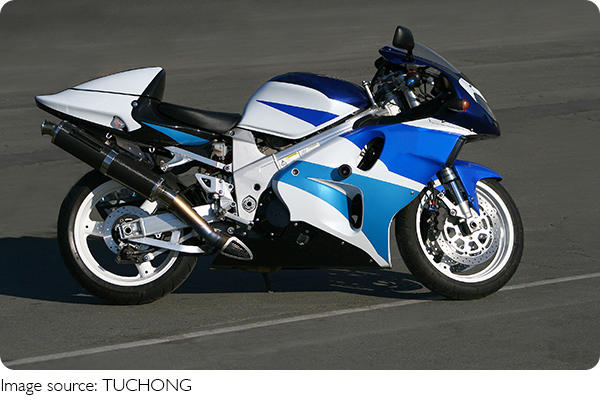
On a typical motorcycle, the right hand manages throttle input and usually the front brake lever, while the left hand operates the clutch. Down at the feet, one side handles gear shifting and the other controls the rear brake. It is a bit like assigning roles in a tiny four-person band. Everybody needs a clear part, or the song turns into kitchen-noise chaos. The throttle is not just an on-off switch. It needs fine, continuous adjustment, sometimes by tiny wrist movements. Putting that control on one hand and keeping it there across models helps riders build muscle memory that becomes automatic.
Coordination matters
One big reason the throttle stays on the right is task separation. The clutch requires repeated squeezing and releasing, especially during starts, stops, and low-speed riding. That action pairs naturally with gear changes, which are commonly handled by the left foot. Meanwhile, the throttle works together with braking control, especially the front brake, which is usually on the right handlebar. That may sound crowded, but in practice these controls are used with different kinds of hand movement. The fingers can cover the brake lever while the wrist modulates throttle input. Riders learn this coordination the way people learn to use chopsticks, a keyboard, or a stubborn zipper: awkward at first, then surprisingly natural.
If the throttle were moved to the left, it would interfere with clutch operation during the moments when smooth coordination matters most. Starting from a stop would become especially clumsy because the same hand would need to manage both engine power and clutch release. That would be like trying to pat your head and tie your shoes at the same time. By keeping the throttle on the right and the clutch on the left, the controls divide the workload in a way that supports smoother takeoffs and steadier low-speed balance.
Mechanical and design logic
Historically, motorcycles developed with this arrangement and then standardized around it. Mechanical linkages, cable routing, and later rider expectations all reinforced the same setup. Once manufacturers, training systems, and riders align around one layout, changing it becomes a giant furniture rearrangement nobody asked for. Standardization matters because riders often switch between motorcycles. A familiar control scheme reduces confusion and improves safety simply by being predictable.
The throttle itself is well suited to a twist-grip on the right handlebar. This design allows direct, precise control of engine input through wrist rotation. Over time, that became one of the defining physical habits of riding. Even as motorcycles evolved from simpler cable-operated systems to more advanced throttle technologies, the basic rider interface remained the same. The machine's internals may get a makeover, but the rider still expects the same handshake at the bars.
Why it barely changes
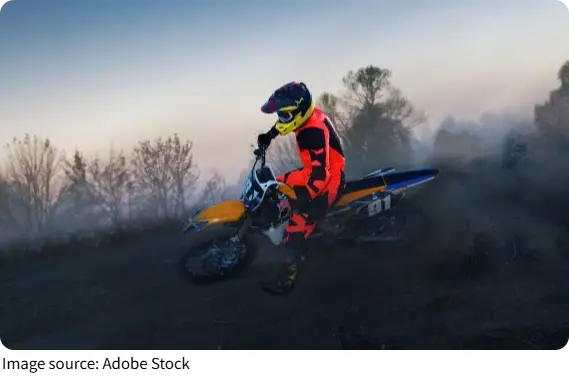
Control layouts do not change easily when millions of riders have learned one system. Training courses, manuals, licensing tests, and manufacturer design choices all lean on consistency. A universal arrangement helps a rider get on a different bike and still know where the key controls are without a long getting-to-know-you phase. That is especially important in situations where quick reactions matter.
There have been exceptions in vehicle history, and not every machine follows identical patterns in every market or category. Still, the right-hand throttle has endured because it solves more problems than it creates. It separates delicate engine control from clutch work, supports standard rider training, and keeps expectations aligned across motorcycles.
So, why is the motorcycle throttle in the right hand, decade after decade? Because the setup works. It divides tasks cleanly, supports smooth control, and gives riders a consistent interface they can trust. Sometimes the best design choice is not flashy or new. It is the one that quietly does its job so well that nobody feels the need to move it.