Capturing Speed

Mei
| 20-08-2026
 · Automobile team
Hi, Readers! A great sports car photo is never just about recording a machine.
It is about turning design, motion, light, and setting into one sharp visual statement. When you want to show speed and power, the key is not only the car itself but also how you place it in the frame, how you use light, and how you control motion.
Strong car photography often comes from small choices that work together: angle, shutter speed, background, reflections, and timing.
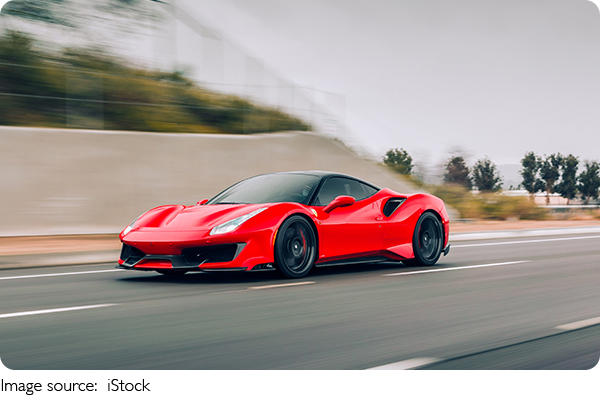
One of the first things to think about is the car's shape. Sports cars are built with low lines, wide stances, and surfaces that catch light in dramatic ways. If you shoot from a lower viewpoint, the car usually looks more dominant and grounded. That perspective also helps emphasize the front profile, the wheel arches, and the long side lines. A higher angle can flatten that effect, so if your goal is force and presence, staying lower often works better.
Use angle with purpose
A car can look completely different depending on where you stand. Front three-quarter views are often effective because they show both the face and the side, giving the image depth and a clearer sense of form. Side profiles can work well too, especially when the goal is to highlight proportion and clean design. If the car has strong details such as headlights, wheels, grilles, or air intakes, move closer and isolate them. Detail shots add variety and help build a fuller visual story. At the same time, keep the background under control. Distracting signs, parked cars, or messy surroundings can weaken the image fast.
Light shapes the mood
Light is one of the biggest factors in automotive photography. Soft light often reveals the lines of a car more gracefully than harsh midday sun. Early or late daylight usually makes the bodywork look smoother and more dimensional. Reflections matter too. Since car surfaces are glossy, they mirror everything around them. That means buildings, trees, and even bright patches of sky can either improve the image or make it feel cluttered. Before pressing the shutter, walk around the car and watch how reflections move across the panels and windows. Sometimes a small shift in position makes a major difference.
Show motion, not just movement
If you want viewers to feel speed, motion blur is one of the most useful tools. A rolling shot or a panning shot can make the car stay relatively sharp while the background stretches into blur. This creates a much stronger sense of movement than a fully frozen frame. Using a slower shutter speed helps produce that effect, but it also requires steadier handling and a bit of practice. The balance is important: enough blur to suggest speed, but enough sharpness to keep the car readable. Wheels also matter in these images. When the wheels show rotational blur, the photo feels more natural and dynamic.
Composition builds power
The frame should guide attention clearly. Leave space in front of the car when it is moving so the image feels like it has somewhere to go. This simple adjustment creates direction and energy. Road lines, bridges, tunnels, and architectural edges can also help lead the eye toward the subject. Clean composition usually makes the car feel stronger because nothing competes with it. Wide lenses can exaggerate scale when used carefully, while longer lenses can compress the scene and create a more controlled, intense look. Each choice changes the emotional feel of the image.
Location matters more than people think
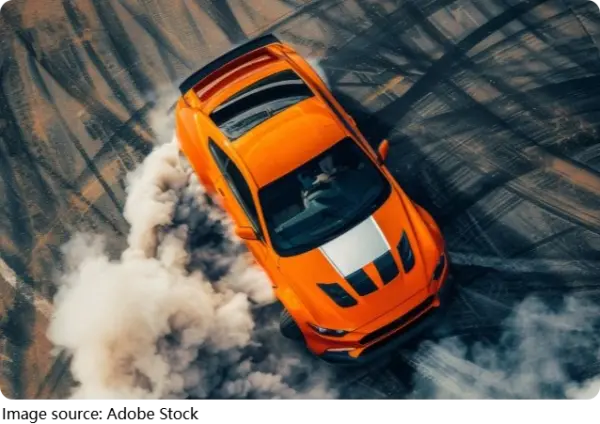
The setting should support the personality of the car. A sleek sports car may look right at home in a modern urban setting, on a clean mountain road, or in an open industrial space. The point is not to make the background louder than the subject. It should complement the car's design and mood. Wet pavement, open curves, and repeating lines often help reinforce a sense of speed and tension. Even when the car is parked, a thoughtful location can make the image feel alive.
In the end, showing speed and strength in sports car photography comes down to control and intention. Use low angles for presence, thoughtful light for shape, blur for motion, and simple backgrounds for clarity. Try different viewpoints, watch reflections carefully, and let the setting support the car rather than compete with it.