SUV Ground Clearance

Arjun
| 28-09-2026
 · Automobile team
When people talk about SUVs, one number comes up again and again: ground clearance.
It sounds technical, but in daily driving, it simply means how much space sits between the lowest part of the vehicle and the road. That distance affects how easily an SUV can go over speed bumps, uneven roads, puddles, and rough paths, but it also changes how the vehicle feels in normal city use.
If you are choosing an SUV, this detail matters more than many people expect.

What Ground Clearance Means
Ground clearance, also called ride height, is the minimum distance between the lower end of a vehicle and the ground. In simple terms, it tells you how likely the underside is to touch the road surface or an obstacle. A higher number usually gives the vehicle a better chance of getting through broken pavement, steep driveways, dirt tracks, and deep ruts without scraping underneath.
That is one reason many people connect SUVs with stronger passability on rough surfaces.
How It Affects Passability
For an SUV, more ground clearance usually improves the ability to travel over uneven terrain. When the body sits higher, the vehicle can clear rocks, road edges, muddy sections, and raised surfaces more easily.
It also helps with approach, breakover, and departure situations, meaning the front, middle, and rear parts of the vehicle are less likely to rub when crossing obstacles or slopes. This is especially helpful on mountain roads, country routes, construction detours, or poorly maintained streets.
Still, ground clearance is only one part of passability. Tires, suspension tuning, drivetrain setup, and the shape under the vehicle also matter.

What It Changes in Daily Driving
In everyday use, higher ground clearance can feel reassuring. You may worry less about scraping when entering parking garages, climbing curb ramps, or crossing speed bumps with passengers and luggage inside. The higher seating position that often comes with SUVs can also give a broader view of traffic, which many drivers find relaxing.
At the same time, there is a trade-off. When a vehicle sits higher, its center of gravity is also higher. That can affect how it feels in corners, lane changes, and sudden steering movements. Compared with a lower vehicle, a taller SUV may feel less planted on fast paved roads.
Engineers work hard to balance this with suspension design and stability systems, but the relationship is still important. So if your driving is mostly city commuting, school runs, and highway travel, very high clearance may not always bring a clear daily advantage.
Comfort, Efficiency, and Ease of Use
Ground clearance can also influence comfort and efficiency. A vehicle designed to sit higher may need suspension settings that balance rough-road ability with body control. If tuned well, the SUV can absorb broken road surfaces nicely.
If tuned more toward rough use, it may feel different from a lower crossover on smooth pavement. Airflow matters too. A vehicle sitting higher off the ground often creates more aerodynamic drag than a lower one, which can affect energy use.
There is also the simple matter of getting in and out. Many people enjoy the easy step-in feel of an SUV, but if the body is especially high, some passengers may find entry a little less convenient. So the best choice depends on who rides with you, where you drive, and what kind of roads you face every week.
How Much Is Enough
Not every driver needs the highest possible clearance. For normal urban roads, moderate clearance is often enough to deal with rain grooves, parking ramps, speed bumps, and occasional rough patches.
If you often travel on gravel roads, uneven rural routes, or unpaved areas, extra height becomes more useful. It is also wise to remember that a heavily loaded SUV can sit lower than usual, reducing the real clearance available.
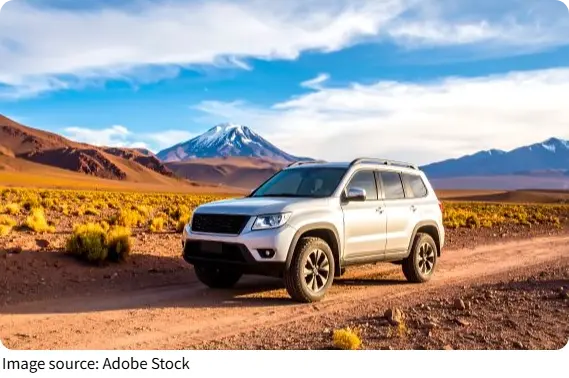
In the end, ground clearance is really about matching the vehicle to your life. More clearance usually helps an SUV handle rougher surfaces with less worry, but too much height can bring compromises in handling, efficiency, and convenience.
If your routine mixes city streets with occasional poor roads, a balanced SUV often makes the most sense. Before choosing, think about where you truly drive, not just how the vehicle looks on paper.