SUV Height and Visibility

Sofia Alvarez
| 19-08-2026
 · Automobile team
Sitting higher in an SUV can immediately change the driving experience. The elevated position can provide a broader view of traffic and make the road ahead easier to monitor.
It can also create a more upright, comfortable posture for everyday driving.
Yet a higher seat does not automatically mean better visibility or greater safety. Vehicle design, field of view, handling, technology, and driver awareness all contribute to how an SUV performs on the road.
The Appeal of a Higher View
An elevated seating position is one of the features that distinguishes many SUVs from lower passenger cars. Being positioned higher can make it easier to observe traffic patterns, vehicles farther ahead, and changes in the road environment.
The added height can also improve everyday convenience. Entering and leaving the vehicle may require less bending, while the upright seating position can provide a comfortable perspective of the road.
For drivers who prioritize a commanding view and practical accessibility, this combination can be an important part of an SUV's appeal.
Height Does Not Eliminate Blind Areas
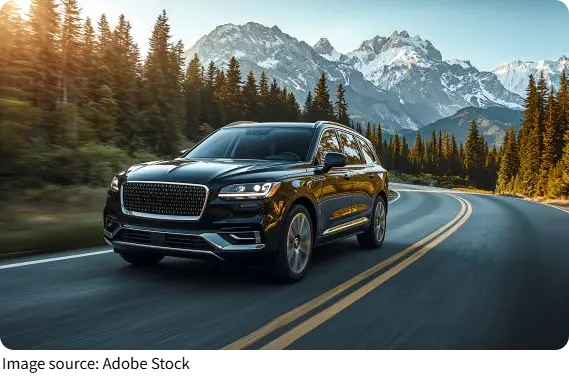
A higher driving position does not provide unrestricted visibility. The hood, windshield, roof pillars, mirrors, rear structure, and body shape all influence what the driver can see.
Low objects close to the vehicle can remain difficult to detect, particularly around the front and sides. Pillars may also obstruct portions of the view when turning or approaching intersections.
For this reason, properly adjusted mirrors, careful observation, and available cameras or sensors can be valuable additions to the driver's field of view.
How Height Influences Handling
SUV height can also affect vehicle dynamics. Because SUVs generally have a higher center of gravity than lower passenger cars, their body movement can differ during cornering, sudden steering inputs, and rapid changes in direction.
Modern suspension and stability systems help control these movements and support predictable handling. Even so, the vehicle's response depends on factors such as speed, steering input, tires, road conditions, and overall design.
A comfortable driving position therefore works best when combined with handling that feels stable and predictable.
Safety Depends on More Than Height
Seating position is only one element of vehicle safety. Structural protection, braking performance, tires, restraint systems, visibility, and electronic safety technologies all contribute to the vehicle's overall performance.
Depending on the model, driver-assistance systems may include automatic emergency braking, blind-spot warning, lane-departure warning, and rear cross-traffic warning. These systems can provide additional support, particularly when detecting hazards that may be difficult to recognize quickly.
The most effective approach is to view these features as complementary parts of a complete safety package rather than relying on any single characteristic.
What to Evaluate Before Choosing
A test drive can reveal more about an SUV's driving position than specifications alone. Check the view through the windshield, side windows, and mirrors, while also paying attention to areas immediately around the vehicle.
It is worth assessing how naturally the steering responds, how confidently the vehicle can be positioned in tight spaces, and whether the seating position allows easy access to the controls.
Safety ratings and available driver-assistance features should also be part of the evaluation. The goal is to find a vehicle that combines practical visibility with comfortable ergonomics and predictable road behavior.
The Right Balance
An elevated driving position can provide useful visibility and everyday comfort, but SUV height should never be considered in isolation.
The strongest choice is one that brings together clear sightlines, predictable handling, effective safety systems, and a comfortable driving position. Ultimately, the value of sitting higher comes from how well those elements work together throughout everyday driving.