How Hybrids Work

Zoe
| 09-09-2026
 · Automobile team
Hi, Readers! If you have ever wondered why a hybrid car feels a little different on the road, the answer lies in how it blends two power sources into one thoughtful system.
A hybrid car usually combines a fuel-powered engine with one or more electric motors, then uses smart control systems to decide which source should do the work at any moment. The goal is not just to move the car, but to do it more efficiently by reducing wasted energy, especially in stop-and-go driving.
At the heart of a hybrid car is the drivetrain, which is the system that sends power to the wheels. In a conventional car, the engine alone provides this power. In a hybrid, the engine works together with an electric motor and a battery pack.
The battery stores electrical energy, and the motor can use that energy to help move the car or sometimes power it by itself for short distances. This arrangement allows the vehicle to use less fuel because the engine does not need to do all the work all the time.
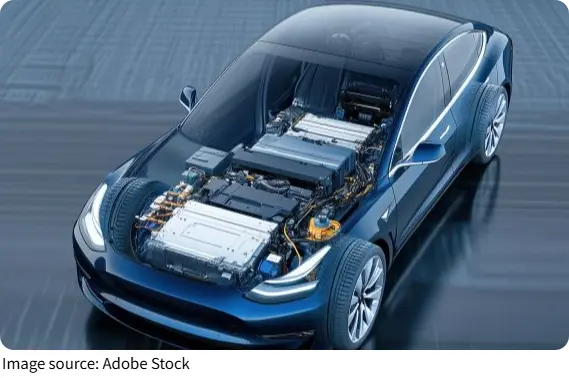
The two power sources
The engine in a hybrid works much like the one in a standard car, providing strong sustained power for higher speeds and longer trips. The electric motor is especially useful at lower speeds, where it can move the car more efficiently.
In many hybrids, the system may start the car in electric mode, then bring in the engine when more power is needed. In other situations, both the engine and the motor work together, such as during quick acceleration or climbing. This shared effort improves efficiency and can also make the car feel smoother in daily driving.
How the battery gets energy
One of the most interesting parts of a hybrid car is that the battery can recharge without needing to be plugged in, in many models. This happens through regenerative braking, where the car captures some of the energy normally lost while slowing down.
Instead of letting that energy disappear as heat, the motor works like a generator and sends electricity back to the battery. The engine can also help recharge the battery in some systems. This constant flow of energy in and out of the battery is a key reason hybrids are so efficient in city traffic.
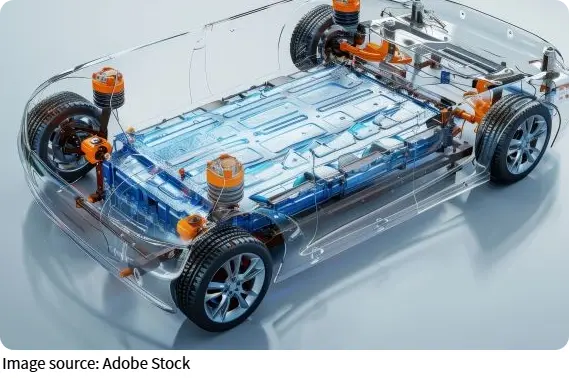
Main hybrid layouts
There are several ways hybrid systems can be arranged. In a series hybrid, the engine does not directly drive the wheels. Instead, it generates electricity, and the electric motor powers the car.
In a parallel hybrid, both the engine and the motor can drive the wheels directly. A series-parallel hybrid combines both ideas, allowing the car to switch between modes depending on driving conditions. This flexibility helps engineers balance fuel savings, performance, and system complexity.
Why hybrids save energy
Hybrid cars improve efficiency in a few practical ways. They can shut the engine off when the car is stopped, reducing unnecessary fuel use.
They can also use the electric motor during moments when engines are typically less efficient, such as starting from a stop. Because regenerative braking recovers part of the energy that would otherwise be lost, hybrids make better use of the energy already available. Altogether, these features help reduce fuel consumption compared with many standard vehicles.
Different levels of hybridization
Not all hybrids work the same way. Some are mild hybrids, where the electric system supports the engine but cannot power the vehicle alone. Others are full hybrids, which can run on the engine, the electric motor, or both.
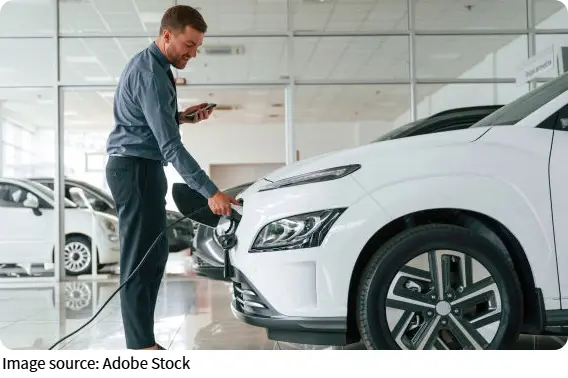
There are also plug-in hybrids, which have larger batteries that can be charged from an outside power source and can drive longer distances on electricity alone. The basic idea stays the same, though: combining mechanical and electrical power in a way that uses energy more wisely.
Hybrid cars can seem a bit mysterious at first, but their working principle is actually quite intuitive once you break it down. They mix an engine, an electric motor, a battery, and energy recovery into one coordinated system that adapts to different driving needs.
If you are curious about cleaner and more efficient transportation, understanding hybrids is a lovely place to start, because it shows how small energy-saving choices inside a car can add up in a big way on the road.