How Different Gearboxes Feel

Naveen Kumar
| 08-09-2026
 · Automobile team
When people talk about how a car feels to drive, the transmission plays a much bigger part than many expect.
It is the system that sends power from the engine to the wheels, and different types do this in very different ways. That is why two cars with similar power can still feel completely different in traffic, on hills, or during quick acceleration.
Some feel smooth and relaxed, some feel lively and direct, and some can seem a little unusual until you get used to them.
Manual transmission
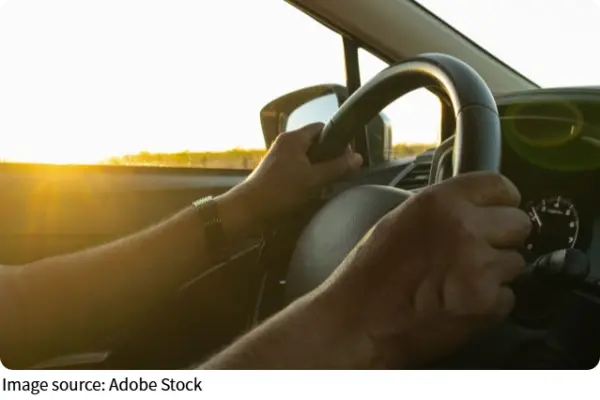
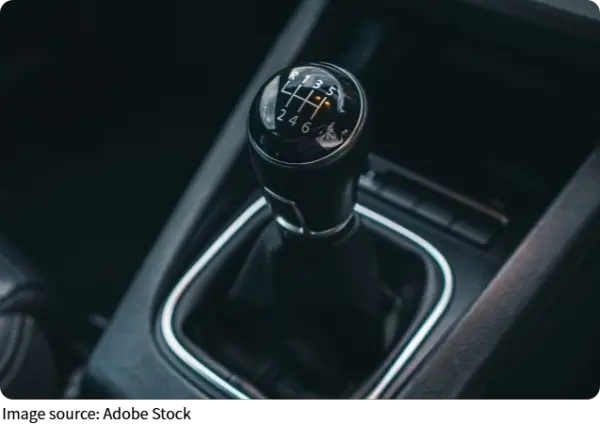
A manual transmission lets the driver choose gears directly by using a gear lever and a clutch pedal. This setup usually gives the strongest sense of control because the driver decides when to shift and how long to stay in each gear.
On the road, that often feels more connected and engaging, especially when climbing, overtaking, or driving on winding routes. At low speeds, though, it asks more from the driver. Stop and go traffic can feel tiring because clutch work and frequent shifting need steady attention. Many drivers enjoy the direct response, but others prefer something easier for daily use.
Automatic transmission
A conventional automatic transmission changes gears on its own, usually through a system that uses planetary gearsets, hydraulic control, and a torque converter. In everyday driving, this type is often known for being smooth and easy. The car can move off gently, and gear changes are usually less demanding for the driver because there is no clutch pedal to manage.
This makes city driving more comfortable and relaxed. The driving feel can be slightly softer than a manual, especially when accelerating from a standstill, because the torque converter can make response feel less immediate. Still, for many people, the convenience is the biggest advantage.
Continuously variable transmission
A continuously variable transmission, often called a CVT, does not shift between a fixed set of gears in the usual way. Instead, it changes drive ratios continuously. The main result is a very smooth flow of power with no clear stepping between gears. In normal commuting, that can feel calm and efficient.
The engine may stay at a steady speed while the car continues to gain speed, which is very different from the rising and falling rhythm many drivers expect. Some people like how seamless it feels, while others feel it seems disconnected because the engine sound and vehicle speed do not always rise together in the familiar way.
Dual-clutch transmission
A dual-clutch transmission uses two separate clutches to prepare the next gear in advance. Because of that, shifts can happen very quickly with little interruption in power delivery. On the road, this often creates a sharp, fast, and sporty feeling. Acceleration can seem more immediate than in many traditional automatic systems, and quick upshifts can feel especially crisp.
At the same time, low speed driving can vary by design. Some dual-clutch systems feel smooth in traffic, while others can feel a little hesitant during crawling speeds or repeated parking movements. Even so, many drivers appreciate the mix of convenience and fast response.
Automated manual transmission
An automated manual transmission is, in simple terms, a manual gearbox with automated clutch and shift control. It removes the clutch pedal for the driver, but its behavior can still feel different from a regular automatic. Because it is mechanically close to a manual, shifts may feel more noticeable, with a brief pause as the system changes gear.
Some drivers describe this as less smooth, especially at low speeds. Still, the design can offer a balance between simplicity and reduced driver effort, depending on how the system is tuned.
How the experience really differs
The biggest differences in driving feel come down to smoothness, control, response, and ease of use. Manual transmissions usually feel the most hands-on. Traditional automatics often feel the easiest and most comfortable. CVTs tend to feel the smoothest in one continuous flow, though their character can seem unusual at first.
Automated manuals can feel practical, but sometimes less refined during shifts. Beyond the transmission type itself, tuning also matters a lot, so two cars with the same basic kind of gearbox may still feel quite different.
In the end, there is no single best transmission for everyone. It really depends on what kind of driving makes you feel comfortable and confident. If you care most about control, you may prefer a manual. If you want an easy daily drive, a traditional automatic may feel more natural. If smooth efficiency matters most, a CVT may suit you well. And if you enjoy quick responses, a dual-clutch setup may feel especially satisfying. The best choice is the one that fits your real daily rhythm and makes every drive feel right to you.