Night Ride Reflectors

Arvind Singh
| 12-08-2026
 · Automobile team
Hi, Readers! Night riding on a motorcycle can feel calm and freeing, but it also brings a much harder visual environment.
Once daylight fades, drivers have less time to notice a rider, judge distance, and react correctly. That is exactly why reflective gear matters so much.
It does not just make a rider look brighter. It helps other road users detect a human shape earlier, understand movement more clearly, and respond with more space and caution.
Motorcycles are already less visible than larger vehicles, and darkness adds another layer of difficulty. Headlights illuminate only part of the road scene, and many drivers mainly notice what stands out in their direct line of sight. Reflective materials return light from headlights back toward the source, which means a jacket, vest, helmet details, or reflective markings on gloves and boots can become visible long before a rider would otherwise be noticed. That extra recognition time can make a meaningful difference in real traffic conditions.
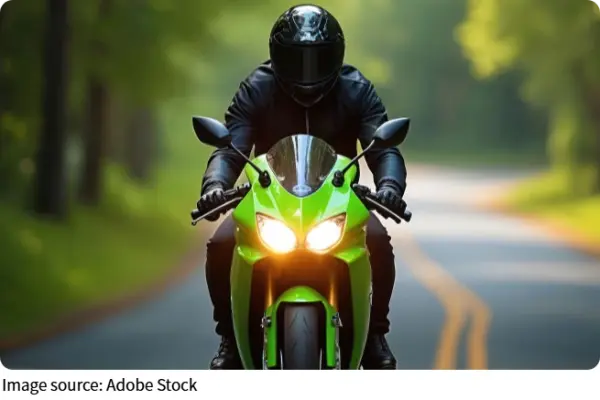
Why Visibility Drops at Night
At night, depth perception, color recognition, and peripheral detection all become weaker. A rider may believe the motorcycle headlamp is enough, yet other drivers still may not quickly distinguish the rider from the background. Dark clothing makes that problem worse. Reflective gear works because it creates contrast at the exact moment another vehicle's lights reach the rider. Instead of blending into the road, the rider becomes a clearer visual signal. This is especially useful at intersections, on curved roads, and in areas with mixed lighting where visual confusion is common.
How Reflective Gear Helps
Reflective equipment improves conspicuity, meaning it helps a rider get noticed sooner. That can support safer lane changes, turning movements, and passing situations. Reflective vests are one of the simplest options because they cover a large area of the upper body, which is often the first part another driver sees. Reflective tape on helmets can also help define the rider's position. Small reflective elements on ankles, knees, wrists, and footwear are useful too, because moving reflective points help signal that the object ahead is a person on a motorcycle, not just a distant light.
What Gear Works Best
The most effective setup usually combines several reflective elements rather than relying on one item alone. A bright jacket with reflective panels, a vest worn over regular riding gear, and reflective accents on the helmet and lower limbs all increase visibility from different angles. Riders should also check whether their gear remains visible when seated in a riding position, since some reflective areas can become folded or hidden. Clean equipment matters as well, because dirt and wear reduce reflectivity over time.
Where It Matters Most
Reflective gear is valuable on any nighttime ride, but it becomes especially important in places where drivers may be tired, distracted, or dealing with limited lighting. Rural roads, suburban intersections, tunnels, parking-lot exits, and roads with frequent oncoming headlights all create visibility challenges. Rain can make things worse by scattering light and reducing contrast. In these settings, reflective clothing and markings act like an extra layer of communication, helping others identify the rider earlier and more accurately.
Reflective Gear Is Not Enough Alone
Even strong reflective equipment should be treated as one part of a broader nighttime riding strategy. Riders still need a working headlamp, tail lamp, turn signals, and proper lane positioning. Speed choice matters too, because visibility distance and stopping distance become more closely linked after dark. A rider who uses reflective gear together with alert riding habits creates a much stronger safety margin than one who relies on any single measure.
Reflective gear may seem like a small detail, but at night it plays a very practical role. It helps riders get noticed sooner, appear more clearly, and communicate presence in a low-light environment where every second counts. If you ride after dark, take a close look at what you wear and how visible it really is. A few bright reflective details can make your ride much easier for others to read, and that is a smart step worth taking.