Cornering Balance
Hiro
| 12-08-2026
 · Automobile team
Hi, Readers! When a motorcycle flows through a corner smoothly, what you are really seeing is balance in motion.
The rider is not simply tilting the machine at random. Cornering depends on how the combined mass of rider and motorcycle stays aligned with speed, tire grip, steering input, and road shape.
If you want to improve "center of mass control" and learn lean angle practice in a safe, systematic way, the key is to understand what the machine is doing first, then train your body and vision in small, repeatable steps.
A motorcycle turns because steering and lean work together. At low speed, riders often steer directly toward the direction they want to go. At higher speed, the machine typically initiates a turn through countersteering, which means a brief steering input opposite the intended direction of the turn. This input helps the motorcycle lean, and once it leans, tire forces and gravity settle into a new balance. Lean angle is not a style choice. It is a response to speed and turn radius. If speed rises while the corner stays equally tight, the machine needs more lean. If the corner opens up, less lean is needed.
What "center control" really means
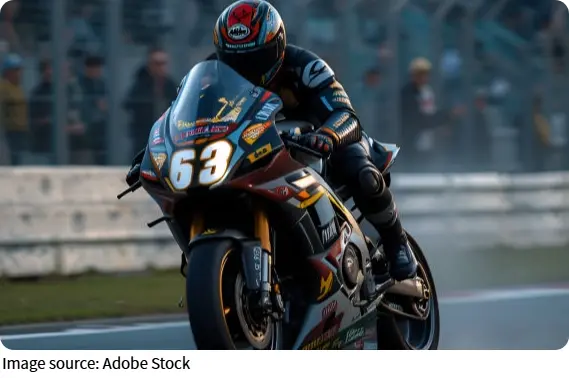
Center control is often described loosely, but in practice it means managing the position of the combined mass of rider and motorcycle so the tires can keep stable contact with the road. The motorcycle itself has a center of mass, and the rider changes the total balance by where they sit, how firmly they hold the bars, and whether their upper body stays relaxed or tense. A stiff rider can disturb steering inputs and make the motorcycle feel reluctant to settle. A relaxed rider allows the chassis to work more naturally.
Body position matters, but it should not be exaggerated at the beginning. Start with a neutral posture: look far through the corner, keep your shoulders loose, support your body with your lower body, and avoid pressing too much weight into the handlebars. The goal is not dramatic movement. The goal is smoothness. Small, consistent body shifts are more useful than large, showy ones.
How to practice lean angle safely
Do not begin by chasing a bigger lean angle. Begin by chasing repeatability. A wide, empty training area is the best place to start. Practice large circles in both directions at a modest speed. Notice whether your line stays constant, whether your head stays level, and whether your hands remain light on the bars. Then gradually tighten the circle a little or increase speed a little, but not both at once. That single-variable approach helps you feel what changes the motorcycle is actually responding to.
A useful drill is the figure eight. It teaches transitions from one lean to the other and shows whether your vision leads the motorcycle smoothly. Another strong exercise is corner entry consistency: pick a clear turning point, apply one clean steering input, and hold a steady throttle through the middle of the turn. If the line drifts wide, you may be entering too fast, looking too near, or adding unnecessary bar pressure mid-corner.
Common mistakes riders make
Many riders think lean angle should be forced with the body. Usually, that leads to awkward posture and uneven control. The motorcycle leans mainly because of steering input and speed conditions, not because the rider tries to drag the machine down physically. Another common mistake is staring at the ground or at the edge of the road. Your motorcycle tends to follow your visual focus, so looking farther ahead gives your steering and balance more time to settle.
Braking deep into a turn or making abrupt throttle changes can also unsettle the chassis. Smooth inputs matter more than dramatic ones. If you want confidence in corners, train your hands to be calm and your eyes to be active. Confidence grows from accurate repetition, not from forcing the pace.
How body position helps
Once your basic line control improves, body position can help reduce how much the motorcycle itself must lean for a given corner. Even a modest shift of the rider toward the inside of the turn can influence the combined center of mass. This does not mean hanging far off the seat in every situation. For normal practice, a slight inside shift, a relaxed outside knee support, and a stable upper body are enough to teach the principle.
Try this progressively. First, ride the same corner with a neutral posture. Then repeat it with a small inside body shift while keeping speed the same. Compare how the motorcycle feels. The point is not style. The point is sensing how rider placement changes balance and steering effort.
In the end, better cornering comes from understanding balance, vision, steering, and smooth repetition. Train in a controlled space, change only one factor at a time, and let precision come before ambition. If you stay patient and observant, your lean angle will improve naturally as your control improves, and that is the kind of progress that truly lasts.