Pickup Size Shock!

Simone
| 01-07-2026
 · Automobile team
Greetings, Readers! A quick look around any supermarket parking lot or city street reveals that pickup trucks are much larger than they were a few decades ago.
Taller hoods, longer wheelbases, and more spacious cabins have become standard features on many models.
This shift is about far more than updated styling, as engineering, safety, customer demand, and regulations have all played important roles. Understanding these factors helps explain why modern pickups continue to grow in size year after year.

From Simple Workhorses to Everyday Family Vehicles
Pickup trucks were originally designed with one primary goal: getting difficult jobs done. Earlier models featured compact cabins, practical cargo beds, and durable mechanical components intended for farms, construction sites, and commercial transportation. Today's pickups serve a much broader purpose. Many owners use them as daily transportation, family vehicles, and long-distance travel companions.
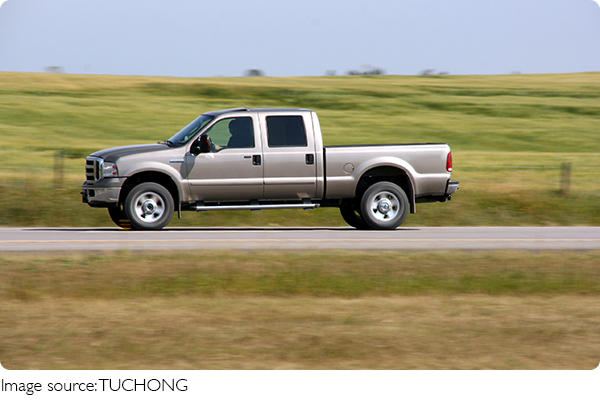
As expectations expanded, manufacturers responded by adding larger rear seating areas, advanced infotainment systems, premium interiors, and greater passenger comfort. The popularity of four-door crew cab models illustrates this shift. Unlike traditional single-cab trucks, crew cabs require a significantly longer wheelbase, increasing the overall dimensions of the vehicle even when cargo bed lengths remain similar.
Capability Continues to Shape Modern Designs
Larger dimensions are not purely cosmetic. Bigger trucks often deliver measurable improvements in capability. A longer wheelbase provides better stability while towing heavy trailers, especially at highway speeds. Stronger frames allow manufacturers to increase payload ratings, making it easier to transport construction materials, recreational equipment, or camping gear without exceeding weight limits.
Modern suspension systems also benefit from the additional space beneath the chassis. Engineers can design stronger rear axles, larger brake components, and more durable cooling systems that support demanding workloads under challenging conditions. Although many owners rarely tow near maximum capacity, buyers often appreciate knowing that their truck is capable of handling those situations whenever needed.
Regulations Have Influenced Vehicle Growth
Government fuel economy standards have quietly affected pickup design for many years. In the United States, fuel economy targets for light trucks are linked partly to a vehicle's footprint, which is determined by wheelbase and track width.
Larger vehicles are permitted different efficiency targets than smaller ones, creating incentives for manufacturers to gradually increase dimensions instead of relying solely on expensive engine improvements.
This regulatory structure does not require companies to build larger trucks, but it has influenced engineering decisions across multiple generations of vehicles. Combined with increasing customer demand, the result has been a steady upward trend in size throughout the industry.
Bigger Trucks Have Become More Profitable
Economics also plays an important role. Full-size pickups generate some of the highest profit margins in the automotive market. Luxury trim levels equipped with leather seating, advanced driver-assistance systems, panoramic cameras, premium sound systems, and sophisticated towing technology often command significantly higher prices than entry-level models.
Because these vehicles generate strong financial returns, manufacturers continue investing in larger platforms that accommodate additional equipment and comfort features. As buyers increasingly choose premium trims, the average size and price of new pickups continue to rise together. This business strategy has transformed pickups from purely utility vehicles into products that compete with large sport utility vehicles for family transportation.
Larger Vehicles Bring New Safety Challenges
While bigger trucks provide excellent occupant protection in many situations, they also introduce new concerns that engineers and safety organizations continue to study. One important factor is hood height. Taller front ends can reduce the driver's ability to see pedestrians, cyclists, or small objects positioned directly in front of the vehicle. This becomes particularly important in crowded parking lots, school zones, and residential neighborhoods.
Vehicle weight is another consideration. Heavier vehicles carry greater momentum during collisions, increasing crash forces when striking smaller passenger cars.
For this reason, manufacturers continue developing automatic emergency braking, pedestrian detection systems, and surround-view camera technology to improve awareness in low-speed environments. Safe driving practices remain essential regardless of vehicle size, particularly when maneuvering in confined spaces.
Everyday Practicality Is Becoming More Difficult
As trucks continue growing, existing infrastructure has struggled to keep pace. Many parking spaces, garages, and urban streets were originally designed decades ago when passenger vehicles occupied much smaller footprints. Today's full-size pickups frequently extend beyond standard parking lines or require multiple adjustments when entering tight spaces.
Turning circles have also increased, making narrow streets and multi-level parking structures more challenging to navigate. Drivers who regularly visit city centers often notice these limitations long before reaching the highway. For owners, these compromises become part of daily life and should be considered alongside the benefits of additional cargo capacity and towing performance.
Electric Pickups Are Expanding the Trend
The arrival of electric pickups has introduced another reason for increasing vehicle size. Large battery packs are necessary to provide competitive driving range while maintaining strong towing capability. These batteries add considerable weight and require substantial space beneath the vehicle, encouraging manufacturers to design even larger platforms.
As electric truck technology continues evolving, engineers face the challenge of balancing battery capacity, efficiency, payload, and vehicle dimensions without sacrificing performance or practicality.
The modern pickup truck has evolved far beyond its original purpose. What began as a practical work vehicle has become a versatile machine that combines passenger comfort, impressive capability, advanced technology, and everyday usability. Larger cabins, stronger frames, evolving regulations, and changing customer expectations have all contributed to this transformation.