Truck Tire Size Guide

Elena Rossi
| 30-06-2026
 · Automobile team
Truck tires do much more than support a vehicle's weight. Their size directly affects handling, braking, towing performance, fuel economy, ride comfort, and the lifespan of suspension components.
Every truck has recommended tire dimensions designed to balance safety, performance, and durability. Whether the truck is used for commuting, hauling heavy loads, off-road driving, or long highway trips, choosing the correct tire size is one of the most important decisions a vehicle owner can make.
Many drivers focus on appearance when selecting larger or wider tires, but every measurement printed on the tire sidewall has a specific engineering purpose. Understanding what those numbers mean helps ensure better performance, improved safety, and lower operating costs over time.
Breaking Down a Truck Tire Size
A common tire size such as 275/65R18 contains several important specifications. The first number, 275, represents the tire width in millimeters from sidewall to sidewall. A wider tire creates a larger contact patch with the road, which can improve grip during acceleration and cornering.
The second number, 65, is the aspect ratio. It indicates that the tire’s sidewall height is 65% of its width. Higher aspect ratios generally provide a smoother ride because the taller sidewall absorbs road impacts more effectively. Lower-profile tires usually improve steering response but transmit more vibration into the cabin.
The letter R stands for radial construction, which is the most common design used today due to its durability, stability, and efficient heat dissipation. The final number, 18, refers to the wheel diameter in inches. The tire must always match the wheel diameter exactly for safe installation.
Truck owners should also consider the tire’s load index and speed rating, which indicate how much weight the tire can safely support and the maximum speed it is designed to handle under specified conditions.
Why Tire Width Matters
Tire width directly affects traction, steering behavior, and rolling resistance. Wider tires often provide stronger grip on dry pavement because more rubber is in contact with the road surface. This can improve acceleration, braking, and cornering stability, especially when carrying heavy loads or towing.
However, wider tires also increase rolling resistance. This means the engine may need to work harder, which can reduce fuel efficiency. In wet conditions, extremely wide tires may also be more prone to hydroplaning if the tread design cannot efficiently channel water away.
For most road-focused trucks, manufacturers choose a tire width that balances stability, comfort, safety, and efficiency.

Sidewall Height Influences Comfort and Control
The tire sidewall plays an important role in ride quality and handling. A taller sidewall flexes more easily over bumps, potholes, and uneven terrain, making it suitable for work trucks and vehicles that frequently travel on rough surfaces. It also helps protect wheels from damage.
Lower-profile tires reduce sidewall flex, resulting in sharper steering response and improved handling precision. However, this often reduces ride comfort, especially on uneven roads. The ideal aspect ratio depends on how the vehicle is used rather than appearance alone.
Load Rating Is Essential for Safety
One of the most important but often overlooked specifications is the tire load rating. Every truck is designed with a Gross Vehicle Weight Rating (GVWR), which defines the maximum safe weight of the vehicle, passengers, cargo, and towing load combined.
Tires must have a load capacity that meets or exceeds these requirements. Using tires with an insufficient load rating can lead to excessive heat buildup, faster wear, reduced stability, and an increased risk of tire failure under heavy loads.
Drivers who regularly tow trailers or carry heavy cargo should always prioritize higher load-rated tires that match their vehicle’s requirements.
Matching Tires to Driving Conditions
Different driving environments require different tire types.
Highway-focused tires are designed for quiet operation, fuel efficiency, and long tread life. Their tread patterns are optimized for smooth, stable performance on paved roads.
All-terrain tires use more aggressive tread designs and reinforced sidewalls. They are suitable for mixed use, including dirt roads, gravel, snow, and light off-road conditions, while still maintaining acceptable on-road comfort.
Mud-terrain tires feature deep, wide tread patterns designed for maximum traction in mud and loose surfaces. However, they typically produce more noise and may wear faster on paved roads.
Choosing the correct tire type often has a greater impact on performance than simply increasing tire size.
Avoid Common Tire Upgrade Mistakes
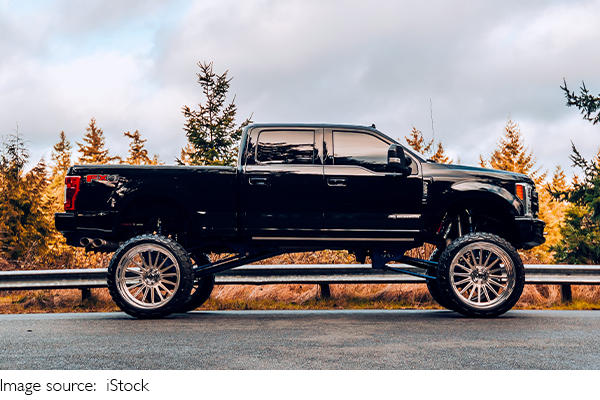
Many truck owners upgrade to oversized tires without fully considering the effects. Increasing tire diameter changes the vehicle’s effective gearing, which can reduce acceleration and affect engine performance.
It may also impact speedometer accuracy, braking distance, and transmission behavior if the vehicle is not properly recalibrated.
Oversized tires can also cause rubbing against wheel wells or suspension components during turns or suspension movement. In some cases, additional modifications such as adjusted wheel offsets or suspension adjustments may be required.
Always follow manufacturer-recommended tire specifications to ensure safety, reliability, and proper vehicle performance.
Understanding truck tire sizes goes far beyond reading numbers on a sidewall. Width, aspect ratio, wheel diameter, load rating, and tire type all work together to determine how a truck performs on the road.
Choosing the right tire means balancing safety, comfort, durability, and efficiency rather than simply selecting the largest available option.