Sensors That Drive Us

Tessa
| 03-07-2026
 · Automobile team
Hi, Friends! You know how you can walk into a room, instantly judge the vibe, spot the furniture, and avoid tripping over the cat?
Well, self-driving cars have to do the same thing, except they are doing it at highway speeds, in rain, and without the benefit of years of embarrassing life experience. The secret sauce?
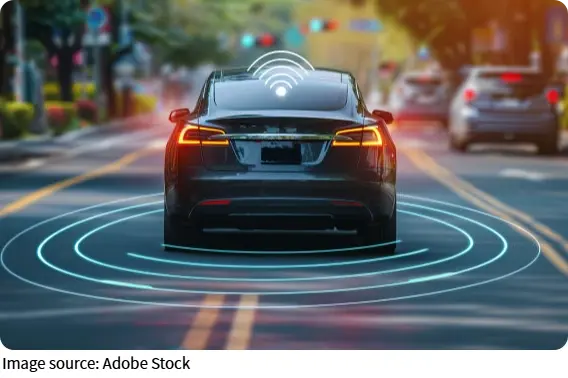
A combo of sensors that would make any sci-fi fan weak at the knees, especially LiDAR and cameras.
The Eyes of the Car: Cameras
Cameras on self-driving vehicles work a lot like your own eyes, except they never blink, never get tired, and they do not complain about the sun being in their face (well, not exactly). These optical sensors capture rich, detailed images packed with color, texture, and contrast.
Think of them as the car's "visual storytelling" tool. They are fantastic at reading road signs, detecting traffic lights, and recognizing lane markings. Some setups use multiple cameras arranged around the vehicle to create a full 360-degree view, kind of like having eyes on the back of your head, which is something most of us have desperately wished for at some point.
The downside? Cameras struggle in low-light conditions and can get confused by glare or fog. They also have a hard time directly measuring distance. A camera can tell you there is a trash can ahead, but figuring out exactly how far away it is requires some extra computational muscle.
The Laser-Sharp Superpower: LiDAR
LiDAR, which stands for Light Detection and Ranging, is basically the car's way of shooting out thousands of laser pulses per second and timing how long they take to bounce back. The result? A super-detailed, three-dimensional point cloud map of everything around the vehicle. It is like the car is constantly sculpting a real-time 3D model of the world out of pure laser light.
LiDAR is ridiculously good at measuring distance with high precision, detecting the shape and size of objects, and working in low-light or nighttime conditions. It does not care if it is dark outside because it brings its own light.
However, it does have its quirks. Heavy rain, snow, and thick fog can scatter those laser pulses and mess up the data. It has also traditionally been the pricey option in the sensor lineup, though costs have been coming down over the years.
Radar: The Unsung Backup Singer
While cameras and LiDAR grab most of the spotlight, radar deserves a mention too. Radar sensors use radio waves to detect objects and measure their speed and distance, even through nasty weather conditions that would trip up cameras or LiDAR. Think of radar as the reliable friend who shows up no matter what, rain or shine. It is not great at fine detail or reading signs, but for detecting that a vehicle ahead just slammed on its brakes? Radar is your guy.
How They All Work Together
Here is where it gets really clever. Self-driving systems do not rely on just one type of sensor. They fuse data from cameras, LiDAR, radar, and sometimes ultrasonic sensors into one unified picture of the world. This process, called sensor fusion, is like having multiple witnesses at an event and combining all their accounts to get the full story.
Each sensor covers the weaknesses of the others. Cameras provide rich visual detail, LiDAR nails the 3D geometry, and radar handles speed and tough weather. Together, they form a perception system that is far more robust than any single sensor could ever be on its own.
The vehicle's onboard computer then processes all of this combined data in real time, using algorithms and machine learning models to identify objects, predict what they will do next, and decide how the car should respond. It is essentially a very fast, very focused decision-making engine that never stops running.
Why This All Matters
Understanding how these sensors work helps us appreciate both how impressive modern autonomous driving technology is and how much there is still to figure out. Each sensor brings its own personality to the party, and getting them to cooperate smoothly is one of the biggest engineering challenges of our time.
So next time you hear about a self-driving car cruising down the street, picture it wrapped in an invisible bubble of laser pulses, camera feeds, and radio waves, all working overtime to make sure the journey is safe. Pretty mind-blowing for something that just wants to get you from point A to point B without drama, right?