Smart Cities, Smarter Cars

Isla
| 03-07-2026
 · Automobile team
Hi, Friends! If you have ever sat in a traffic jam so bad that you started questioning your life choices, you are going to love what is coming.
Autonomous driving and intelligent transportation systems are joining forces, and together they are basically the dream team that city planners have been waiting for.
Think of it like peanut butter meeting jelly, except instead of a sandwich, you get a smoother, safer, and way smarter city.
What Is an Intelligent Transportation System?
An intelligent transportation system, or ITS, is essentially the nervous system of a smart city. It connects roads, vehicles, traffic signals, and data centers into one big communicating network. Instead of traffic lights just blindly switching between red and green on a timer, they actually respond to real-time conditions.
Sensors pick up how many vehicles are on the road, cameras monitor flow, and the whole network adjusts dynamically. It is like the city itself learned how to breathe properly.
Where Autonomous Vehicles Fit In
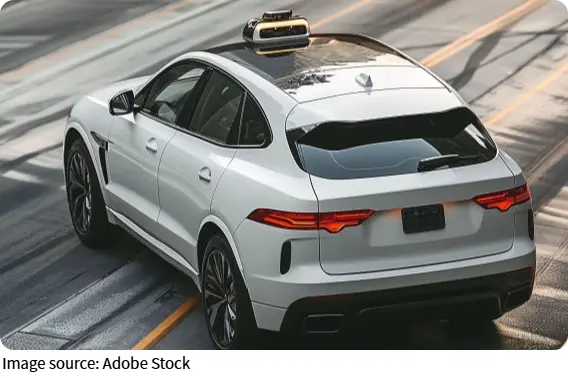
Now plug a self-driving vehicle into that network, and things get really interesting. Autonomous vehicles rely on a combination of onboard sensors, cameras, radar, and real-time data to navigate. When they can also tap into a city-wide ITS infrastructure, they are not just reacting to what is directly in front of them.
They know about a slowdown three intersections ahead, a road closure on the next block, or a pedestrian who just stepped off a curb half a kilometer away. It is the difference between a driver who only looks straight ahead and one who has eyes on the entire city at once.
Vehicle-to-Everything Communication
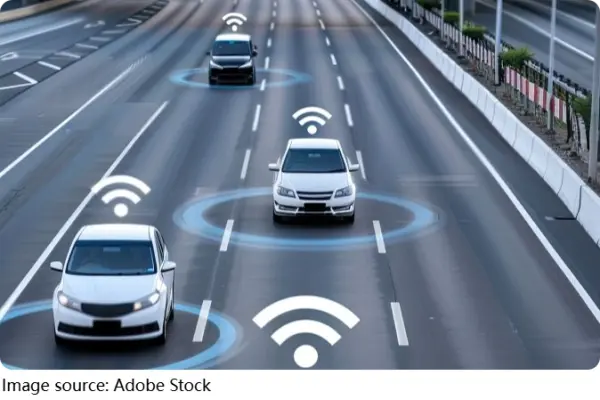
One of the coolest pieces of this puzzle is called V2X, which stands for vehicle-to-everything communication. Your autonomous vehicle is not just talking to other cars. It is exchanging information with traffic signals, road infrastructure, pedestrians carrying smartphones, and even the cloud. If a traffic light is about to turn red, the vehicle already knows before it visually detects the signal change.
If there is an emergency vehicle two blocks over, every connected car in the area gets a heads-up and adjusts. It is basically a city-wide group chat where everyone is surprisingly cooperative, and nobody is posting memes.
Making Cities Safer and Less Congested
The combination of autonomous driving and ITS does not just make commutes more comfortable. It tackles two of the biggest headaches in urban life: safety and congestion. Human error accounts for the vast majority of traffic incidents. When vehicles can communicate with each other and with road infrastructure, the reaction times are measured in milliseconds rather than human seconds.
Intersections can be managed so that vehicles flow through without full stops, reducing both delays and the fuel inefficiency of constant stop-and-start driving. Cities that have piloted connected and autonomous vehicle systems have reported measurable drops in congestion and notable improvements in overall traffic flow.
Smart Parking and Last-Mile Solutions
Here is something nobody talks about enough: parking. It sounds boring, but an absurd amount of urban traffic is just people circling, looking for a spot. Smart city ITS systems can guide autonomous vehicles directly to available parking spaces in real time, eliminating that entire circus.
On top of that, autonomous shuttles operating on fixed smart-city routes can solve the last-mile problem, getting people from transit hubs to their final destination without needing a personal vehicle at all.
Challenges Still on the Road Ahead
It is not all smooth highways, though. Building the infrastructure for ITS requires massive investment from city governments and telecom providers. Cybersecurity is a genuine concern because a network connecting thousands of vehicles and traffic systems is also a network that could be targeted.
Standardization across different vehicle manufacturers and city systems is another hurdle. And of course, public trust in autonomous systems needs to be earned gradually through demonstrated reliability, not just promised through press releases.
The future where autonomous vehicles and intelligent transportation systems work together like a well-rehearsed orchestra is nearer than most people realize. Cities are already laying the groundwork, testing pilot zones, and refining the tech. The commute you dread today could genuinely become the ride you look forward to tomorrow.
Pretty wild, right?
What part of this smart city future are you most excited about? Drop your thoughts, because this is one conversation worth having.