Self-Driving Cars vs Crashes

Declan Kennedy
| 29-06-2026
 · Automobile team
Hi, Friends! If you have ever sat in traffic and thought, "A robot could drive better than half these people," well, buckle up, because the data is starting to agree with you.
Autonomous vehicles, particularly those developed by Waymo, are being put through the wringer in real-world conditions, and the results are genuinely eye-opening.
What the Numbers Actually Say
Think of traditional human driving like a group project where one person always forgets their part. Humans get distracted, misjudge distances, react slowly, and sometimes just have a bad day behind the wheel. Autonomous vehicles, on the other hand, are like that one hyper-focused classmate who reads every instruction twice. Waymo's real-world data shows that its fully autonomous driving system has been involved in significantly fewer injury-causing crashes compared to human drivers covering the same type of roads and distances. We are talking about a dramatic reduction in airbag-deployment crashes and incidents causing any physical injury. That is not a minor tweak, that is a full renovation of road safety standards.
How the Testing Actually Works
Waymo does not just park a robot car in a lab and call it a day. Its vehicles have racked up millions of miles on real public roads, navigating the beautiful chaos of city traffic, pedestrians making questionable jaywalking decisions, cyclists appearing out of nowhere, and drivers who treat lane markings like suggestions. Every single mile generates data. Every near-miss, every smooth stop, every successful navigation through a tricky intersection gets logged and analyzed. It is essentially a never-ending driving exam that humans would absolutely fail after hour three.
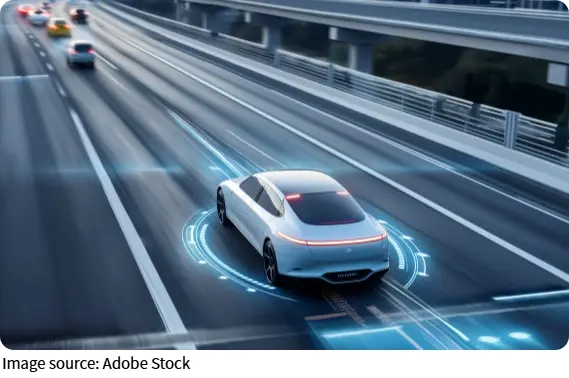
The autonomous system uses a combination of lidar, radar, and cameras to build a 360-degree picture of the world around it, constantly. No blind spots, no checking a phone, no reaching for a dropped snack. The reaction time is also in a completely different league from human reflexes, catching potential hazards in fractions of a second.
Injury Crashes Take a Serious Hit
Here is where things get really interesting. When Waymo compared its autonomous driving data against human driver benchmarks from comparable urban environments, the numbers showed a steep drop in crashes that caused injuries. The fully driverless mode, where there is absolutely no human behind the wheel ready to take over, actually performed better than scenarios involving a human safety driver sitting in the vehicle. That detail alone flips a lot of assumptions on their head. The common worry is that removing a human entirely makes things riskier, but the data tells a different story.
Rear-end collisions, one of the most common types of human-caused crashes, also showed a notable reduction. The system's ability to maintain precise following distances and anticipate sudden stops is basically the calm, collected driver that none of us fully manage to be at 7 a.m. on a Monday.

What This Means for the Bigger Picture
Now, before everyone rushes to hand over their car keys permanently, it is worth noting that autonomous driving technology is still expanding. Waymo currently operates in specific cities and conditions, and there are plenty of edge cases, unusual weather, construction zones, truly unpredictable human behavior, that continue to be studied. But the trajectory is clear. More miles, more data, and continuously improving performance.
The real-world testing model also matters here. Simulations are useful, but nothing beats actually driving millions of miles through real cities with real people doing unpredictable things. The data collected from these rides feeds directly back into making the system smarter, safer, and more adaptable.
Road safety researchers and transportation experts are paying close attention, because if autonomous vehicles can consistently outperform human drivers across diverse conditions, the implications for accident rates, emergency response demand, and even insurance systems are enormous.
So next time someone scoffs at the idea of a self-driving car, just casually mention that the robot has a pretty solid driving record. The data is doing the heavy lifting, one million miles at a time. What do you think, Lykkers? Would you trust a self-driving car for your daily commute? The numbers might just convince you sooner than you expect.