Your Car Knows You

Caroll Alvarado
| 03-07-2026
 · Automobile team
Hi, Friends! Ever thought about how much your car actually knows about you?
We're talking your daily routes, your favorite coffee stops, how aggressively you brake, and maybe even your face.
Self-driving and connected vehicles are basically rolling data centers on wheels, and the question of who owns that information is becoming one of the hottest debates in the automotive world.
Cars Are Now Data Machines
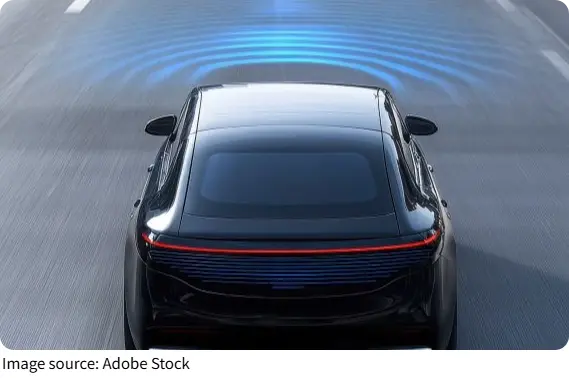
Modern connected vehicles collect a staggering amount of information. Think of your car as a very nosy roommate who never sleeps, quietly logging everything from your GPS coordinates and driving habits to biometric data like fingerprints or face-based recognition used for driver identification.
Autonomous driving systems rely on cameras, radar, and sensors that are constantly scanning the environment, meaning they're also picking up data about pedestrians, other drivers, and the roads around you. It's helpful for the tech, sure, but it raises a pretty big eyebrow when you think about where all that data goes.
Why Privacy Protection Actually Matters Here
The automotive industry has recognized that this is not a small issue. As vehicles become smarter, the volume of personal data flowing through them grows exponentially. Without strong protections, that data could be accessed by third parties, used for targeted advertising, or, in worse scenarios, exposed through security breaches.
Imagine someone being able to track your exact movements every day just by tapping into your vehicle's data stream. That's not science fiction anymore. That's a real vulnerability that needs a real solution.
What the Industry Is Doing About It
Automakers and industry bodies are increasingly pushing for clearer data governance frameworks. The approach involves several layers of protection. First, there's data minimization, which basically means only collecting what's absolutely necessary for the vehicle to function safely. No hoarding data just because you can.
Second, companies are working on anonymization techniques so that even if data is collected, it can't be traced back to a specific person. Third, user consent is becoming a bigger deal. Drivers should be clearly informed about what data is being collected and have the ability to opt out of non-essential data sharing. It's like a cookie consent pop-up, but for your entire car life.
The Tech Side of Keeping Data Safe
On the technical front, cybersecurity in connected vehicles is a whole field unto itself. Encrypting data both when it's stored and when it's being transmitted is considered a baseline requirement now. Over-the-air software updates, which are common in modern vehicles, need to be secured so hackers can't use them as a backdoor.
Automakers are also working on secure communication protocols between vehicles and infrastructure because self-driving cars need to talk to traffic systems, and you really don't want anyone eavesdropping on that conversation or, worse, sending fake signals.
The Regulatory Push
Governments and regulators around the world are starting to catch up with the technology. Data protection regulations are being extended to cover the automotive sector more explicitly. Automakers are being encouraged to build privacy protections into their systems from the design stage, rather than slapping on fixes after the fact.
This "privacy by design" philosophy treats data protection as a core feature, not an afterthought. Industry associations are also developing voluntary standards and guidelines to help manufacturers navigate this complex landscape, while pushing for internationally consistent rules so that cross-border data flows are handled responsibly.
What This Means for You as a Driver
Here's the practical takeaway. When you buy or lease a connected vehicle, it is worth reading the privacy policy, as tedious as that sounds. Find out what data your car collects, who it shares that data with, and what your rights are when it comes to accessing or deleting your information. Some automakers are starting to offer dashboards where you can manage your data preferences directly, which is a step in the right direction.
The more informed drivers are, the more pressure there is on manufacturers to keep data handling clean and transparent.
The road ahead is undeniably smart, but it must also be safe—not just in terms of crash tests, but in terms of your digital footprint. As vehicles evolve from machines into intelligent companions, your right to privacy should remain non-negotiable. Don't wait for a breach to care about your data.
Read the fine print, use your consent options, and demand transparency. The future of driving belongs to those who drive it—not those who track it. Stay aware, stay protected, and keep your eyes on the road—and on your rights.