Flying Cars Future

Julian
| 22-05-2026
 · Automobile team
Lykkers, imagine a trip between two busy coastal cities shrinking from hours on crowded roads to just minutes in the air. This is the promise behind a new generation of flying vehicles now entering test stages around the world.
While early trials have shown that short urban air routes are possible, the journey toward everyday use is still filled with technical and regulatory hurdles that cannot be ignored.
A New Way to Travel
We are starting to see a shift in how personal transport is imagined. At international aviation exhibitions, compact flying machines have drawn strong attention, quickly followed by limited test flights in controlled airspace.
These vehicles rise vertically without a runway, similar to large drones, and then transition into forward flight. In early demonstrations, short regional routes between nearby cities have shown that air-based commuting could significantly reduce travel time in the future.
Industry observers often compare this stage to the early days of electric mobility—full of promise, but still far from everyday convenience.
How the Designs Work
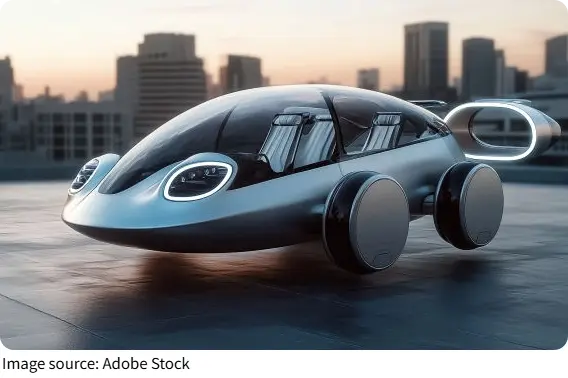
Most current prototypes rely on vertical lift systems. This means they take off straight upward rather than accelerating along a runway. Structurally, they often combine a compact cabin with multiple rotating propulsion units.
Some models are designed like lightweight aircraft with familiar vehicle-inspired shapes, while others separate their flight system from the ground module. In those designs, the flight component carries passengers through the air, then reconnects with a base unit after landing.
This modular thinking helps reduce weight during flight and improves energy efficiency, but it also shows how far these machines are from the simple idea of a road vehicle that can also fly.
Energy and Performance Limits
One of the biggest challenges is energy storage. Current systems rely on batteries that must remain light while still delivering enough power for flight. Because of this balance, most prototypes can only stay airborne for a limited time under ideal conditions.
In practice, flight duration is still relatively short, often measured in tens of minutes rather than hours. This limitation raises important concerns about reliability in real-world operations, especially over populated areas.
Engineers are exploring higher-density energy solutions, but breakthroughs are still needed before longer, more practical journeys become routine.
Safety and Public Confidence
Safety remains the most critical requirement. Aviation authorities apply strict certification standards, ensuring that any airborne transport system meets extremely high reliability thresholds before carrying passengers regularly.
Experts emphasize that even small technical failures in the air can have serious consequences, so redundant systems, real-time monitoring, and advanced control software are essential.
Beyond engineering, public confidence is just as important. People will need clear evidence that these vehicles can operate safely under different weather and traffic conditions before widespread acceptance becomes possible.
Noise and City Environments
Another key issue is sound. Rotor-based lift systems naturally generate noise, especially during takeoff and landing. While newer prototypes are quieter than traditional aircraft, sound levels still matter in dense urban environments.
Some designs aim to reduce disturbance through improved rotor shapes and sound-insulating materials inside the cabin. However, large-scale deployment could still influence how cities manage low-altitude airspace.
True near-silent flight remains an ambition rather than a current reality.
Rules Still Taking Shape
Perhaps the most complex challenge is not technical but organizational. Urban air travel requires a completely new system of rules for managing low-altitude routes.
Questions remain open: Who controls air corridors? How are flight paths coordinated? What certifications will pilots need? And how should responsibility be assigned if incidents occur?
At present, multiple sectors are involved, including transportation regulators and aviation authorities, but a unified framework is still under development. Without it, large-scale deployment cannot move forward safely.
The Road Ahead
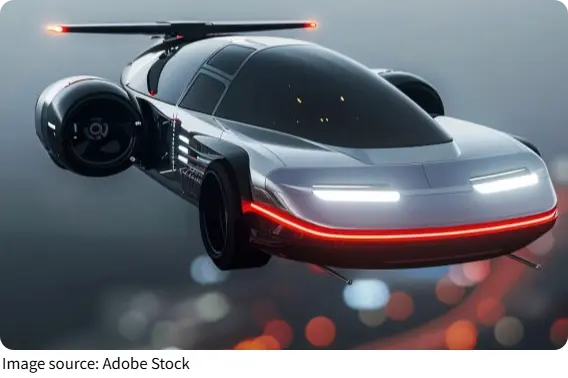
Most experts believe early applications will focus on logistics, emergency response, and specialized transport rather than personal ownership. These controlled uses allow real-world data to be collected while limiting risk.
In the coming years, limited commercial services may appear in selected regions, but widespread adoption is expected to take much longer. Many forecasts suggest that routine urban air transport could emerge gradually over several decades.
Even then, the vision is likely to resemble shared aerial transit systems rather than individual flying vehicles for every person.
In the end, flying cars are no longer just imagination—they are real machines in testing, slowly proving what is possible. Yet their future depends not only on engineering progress, but also on safety standards, regulations, and how cities choose to adapt.
The sky may eventually become part of everyday travel, but the path there is still being carefully built step by step.