Spinach's Power

Ethan Sullivan
| 21-05-2026
 · Cate team
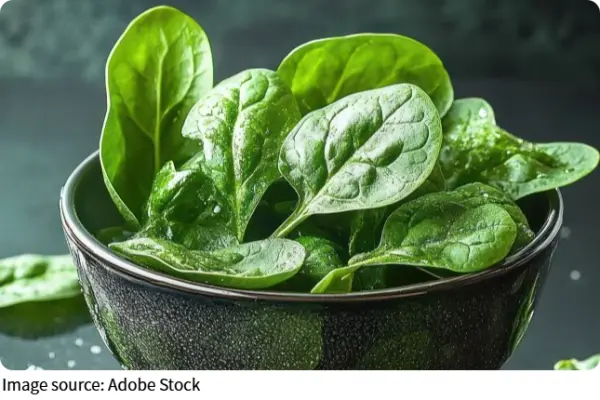
Spinach doesn't ask for much attention. It wilts into dishes, disappears into smoothies, and blends into the background of a salad. But don't let that quiet nature fool you — nutritionally, this leafy green is doing a lot of heavy lifting. Registered dietitian Kayla Kopp puts it plainly: spinach is one of the most nutritious foods you can eat.
Two-thirds of a cup of raw spinach has only 23 calories. Zero cholesterol, zero lipids. But it comes with 402% of the daily recommended vitamin K, significant amounts of vitamin A, folate, manganese, and nearly 3 grams of protein per 100 grams. That's a remarkable nutritional return for something that takes up almost no space on your plate.
What All That Vitamin K Is Doing
Vitamin K is essential for proper blood clotting — it's what gets triggered when you get a cut and your body needs to stop bleeding. But it also plays a role in calcium absorption and overall joint health. Spinach delivers more vitamin K per serving than almost any other common food. For context: a cup of raw spinach has about four times more vitamin K than the same amount of lettuce.
Spinach is also one of the richest plant-based sources of lutein, a carotenoid strongly linked to eye and brain health. Studies suggest that eating half a cup of leafy greens daily slows age-related memory changes. The folate and phylloquinone in spinach may also help reduce proteins that build up in the brain over time — proteins associated with cognitive decline.
Raw vs. Cooked — and Why Both Matter
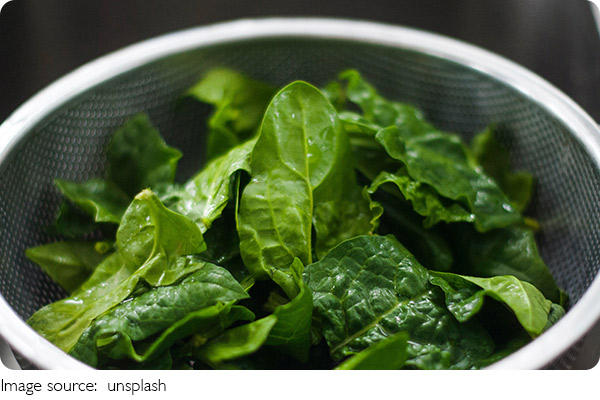
Here's where spinach gets a little nuanced. Raw spinach is better for folate, potassium, and vitamin C, which are more easily absorbed before cooking. Cooked spinach, on the other hand, provides more calcium and iron, because heat breaks down the oxalic acid that otherwise blocks absorption of those minerals.
The smartest approach is to eat it both ways. Sauté it with garlic and olive oil as a quick side dish —the lipids also help your body absorb lipid-soluble vitamins like A and K. Eat it raw in salads. Add a handful to a smoothie — you'll barely taste it, and the color turns green in a good way.
A Few Things Worth Knowing
Spinach contains oxalates, which in high amounts can contribute to kidney stones in people prone to them. If that's a concern, cooking spinach reduces oxalate levels. People taking blood thinners should also be consistent with how much they eat, since large amounts of vitamin K can affect medication.
For most people, though, spinach is simply a low-cost, high-reward vegetable. Fresh bundles from the market tend to be the most nutrient-rich, and spinach loses nutrients over time in the fridge — use it within a few days of buying.