Kiwi Truth

Ethan Sullivan
| 21-05-2026
 · Cate team
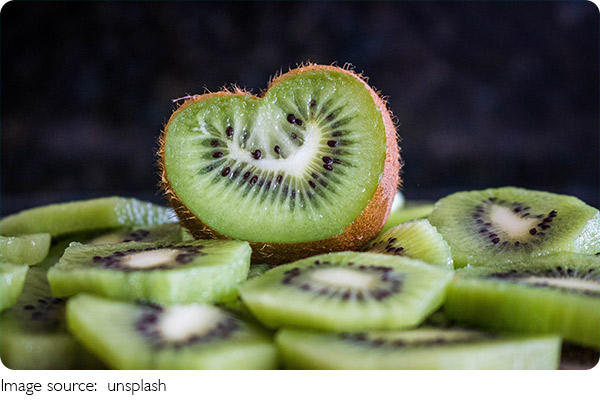
Pick up a kiwi and it doesn't look like much. Small, oval, covered in that rough camel-brown fuzz. Cut it open, though, and the bright green flesh with its ring of tiny black seeds is almost startling in its color. And the taste — sweet, tart, almost electric — makes it impossible to think of as just a background fruit.
The kiwi is actually a large berry. Originally from eastern China, it was popularized as an export crop by New Zealand and eventually made its way into grocery stores everywhere. Most people know it vaguely as "that green fruit in the fruit salad." But its nutritional profile puts it in a different category entirely.
The Vitamin C Numbers Are Remarkable
One kiwi contains roughly 230% of the daily recommended intake of vitamin C. That's not a typo. A single serving of this fruit more than doubles what you need in a day. Green kiwis have about twice the vitamin C of an orange; gold kiwis (the yellow-fleshed variety with a smoother skin) have roughly three times as much.
Vitamin C is the body's front-line antioxidant — it protects cells from damage, supports collagen production for skin and connective tissue, helps with iron absorption, and plays a central role in immune function. Eating kiwi regularly provides a consistent, natural supply of it. Beyond vitamin C, kiwis also contain vitamin E, vitamin K, folate, potassium, and fiber — a combination that supports heart health, blood pressure regulation, and overall metabolic function.
The Digestion Angle
Here's something most people don't know about kiwis: they contain an enzyme called actinidin that's unique to this fruit. Actinidin breaks down proteins more efficiently than most digestive enzymes, which means eating kiwi alongside a protein-rich meal can genuinely improve digestion. For anyone who regularly feels heavy or uncomfortable after eating, this is worth paying attention to.
The fiber content adds to the digestive picture. Green kiwis have about 3 grams of fiber each; gold kiwis a bit less. That fiber, combined with actinidin, makes kiwi particularly effective for regularity. Some registered dietitians specifically recommend two to three kiwis per day for patients with gastrointestinal conditions, citing the combination of fiber and the enzyme as especially helpful.
Heart Health and Blood Pressure
Kiwis are a nutrient-dense fruit, providing fiber, potassium, and high levels of vitamin C. These nutrients are associated with cardiovascular benefits, particularly in supporting healthy blood pressure regulation.
Research suggests that regular kiwi consumption may help modestly lower blood pressure in people with elevated readings, likely due to its potassium content and other bioactive compounds. Kiwi also contains antioxidants, which may help reduce oxidative stress in the body — a process linked to cardiovascular disease development.
While some studies have observed improvements in cardiovascular risk markers with kiwi intake, evidence on direct reductions in heart disease risk is still limited, and more long-term research is needed.
How to Eat It
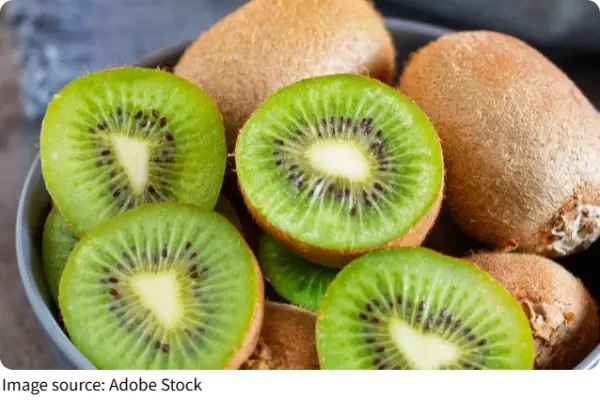
The skin is edible — tart, a little furry, and actually higher in fiber and vitamin C than the flesh. Most people skip it, but it's worth trying. If peeling is preferred, slice the kiwi in half and scoop the flesh out with a spoon. That's really all it takes.
Add slices to a fruit salad, blend into a smoothie, or layer on top of yogurt with a drizzle of honey. On its own with nothing added, a ripe kiwi is already good enough to eat like a snack between meals — no prep, no fuss, just that bright, tangy hit of flavor.