The Cotton Castle Dream

Mariana Silva
| 20-05-2026
 · Travel team
Friends, imagine walking barefoot across brilliant white terraces that look like frozen waterfalls, warm mineral water pooling around your ankles while the ruins of a 2,000-year-old city stretch out behind you.
Pamukkale—meaning "Cotton Castle" in the local language—is a UNESCO World Heritage Site located in the Denizli Province of southwestern Anatolia.
This extraordinary natural wonder, formed over millennia by calcium-rich thermal springs depositing layer upon layer of travertine, is one of the most visually stunning destinations on the planet. Paired with the ancient city of Hierapolis sitting directly above, this is a place where nature and history merge seamlessly.
Travertine Terraces
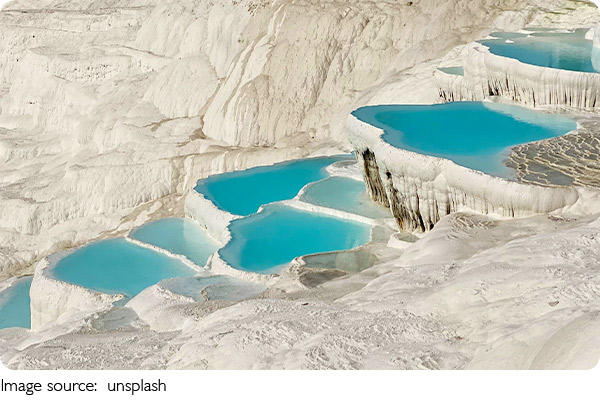
The iconic white terraces cascade down the hillside like a frozen cascade of snow, though the surface is actually warm mineral-rich stone. Thermal water at roughly 36 degrees Celsius flows across designated walking paths, creating shallow pools that shimmer turquoise against the white calcium deposits. Visitors must remove their shoes before stepping onto the terraces—the delicate formations are protected, and walking barefoot is mandatory.
The surface can be slippery in places and slightly rough in others, so walking slowly is important. Bring a small bag to carry your shoes, and wear swimwear underneath clothing for easy dipping into the warm pools.
Tickets and Entry
A single combined ticket covers both the travertine terraces and the entire Hierapolis ancient city, including the Hierapolis Archaeology Museum. The entrance fee for international visitors is approximately $33 (around 700 TL). Two entrance gates are available: the South Gate provides the closest access to the terraces, Cleopatra's Pool, and the main archaeological area, making it the most convenient choice.
The North Gate is typically less crowded and allows visitors to walk through the ancient necropolis before reaching the central site—an excellent option for those arriving early.
Cleopatra's Antique Pool—a thermal swimming pool filled with warm, mineral-rich water where ancient Roman columns lie submerged beneath the surface—requires a separate admission fee of approximately $7 to $14, depending on the ticket type. This unique swimming experience operates seasonally, so verifying its status before visiting is recommended.
Ancient Hierapolis
Founded in the 2nd century BCE as a thermal spa center, Hierapolis grew into a prosperous Greco-Roman city whose ruins now spread impressively across the plateau above the terraces. The remarkably well-preserved ancient theatre seats approximately 12,000 and offers sweeping views of the surrounding valley—climbing to the upper rows is free with site admission and provides outstanding photography opportunities.
The sprawling necropolis, one of the largest and best-preserved ancient cemeteries in Anatolia, stretches along the northern approach with ornate stone sarcophagi lining the ancient road. The Archaeology Museum, housed in a restored Roman bath building, displays sculptures, sarcophagi, and artifacts from Hierapolis and nearby Laodicea—included with the main ticket.
Where to Stay
The small village of Pamukkale sits at the base of the terraces and offers the most convenient accommodation for early-morning or sunset visits. Budget guesthouses start from approximately $22 to $49 per night, with many offering rooftop terraces with views of the illuminated terraces at night. Mid-range hotels in Pamukkale village range from $55 to $110 nightly, often including breakfast and sometimes small thermal pools on-site.
The nearby city of Denizli, about 20 minutes away by minibus, offers additional options—budget hotels from $16 to $27 per night and mid-range properties from $55 to $110. Booking 25 to 30 days ahead typically secures the best rates.
Pamukkale
Getting There
Denizli Çardak Airport sits approximately 70 kilometers from Pamukkale, with shuttle transfers, taxis, and pre-arranged hotel pickups available. Taxi fare from the airport to Pamukkale village costs roughly $40 to $55. Regular intercity buses connect Denizli to major cities across the region—the Denizli bus terminal handles frequent departures to coastal cities and inland destinations.
From Denizli bus station, a local dolmuş (shared minibus) runs to Pamukkale village for approximately $1.50 to $2, departing every 15 to 20 minutes during daytime hours.
Timing Your Visit
Spring (April through June) and autumn (September through October) deliver the most comfortable temperatures for exploring both the terraces and the ruins. Summer heat can be intense, with limited shade across the site—bring sunscreen, sunglasses, and at least one liter of water per person.
Arriving at opening time (typically 6:30 AM in summer) or in late afternoon avoids the heaviest tour-group crowds and offers the most beautiful light for photography. Sunset visits are especially magical, as warm light turns the white terraces golden and pink.
Budget Tips
Dining in Pamukkale village is very affordable. Local lokanta-style restaurants serve authentic regional meals—grilled meats, fresh salads, flatbread, and stews—for $5 to $12 per person. Cafés near the site entrances charge tourist-level prices, so eating in the village center saves significantly. A hot air balloon flight over the terraces at sunrise costs approximately $160 to $220 per person, offering an unforgettable aerial perspective of the white landscape.

Readers, Pamukkale is proof that nature creates art more breathtaking than anything human hands could design. Walking barefoot across those warm, white terraces while ancient ruins watch silently from above is an experience that settles deep in memory. Next time someone asks for a destination recommendation that truly amazes—would this Cotton Castle be the first name on your lips?